AIFoundersTomorrowX 2026November 2026
The Women of TomorrowX: Lin Qiao on AI’s Next Wave, and Laura Harrison on the Neuroscience of Building the Future
Fireworks AI’s CEO predicted AI will get 100 times cheaper while usage grows more than 1,000 times. Valor’s Director of Neuroscience made the case that the future we build starts with how we think about it.
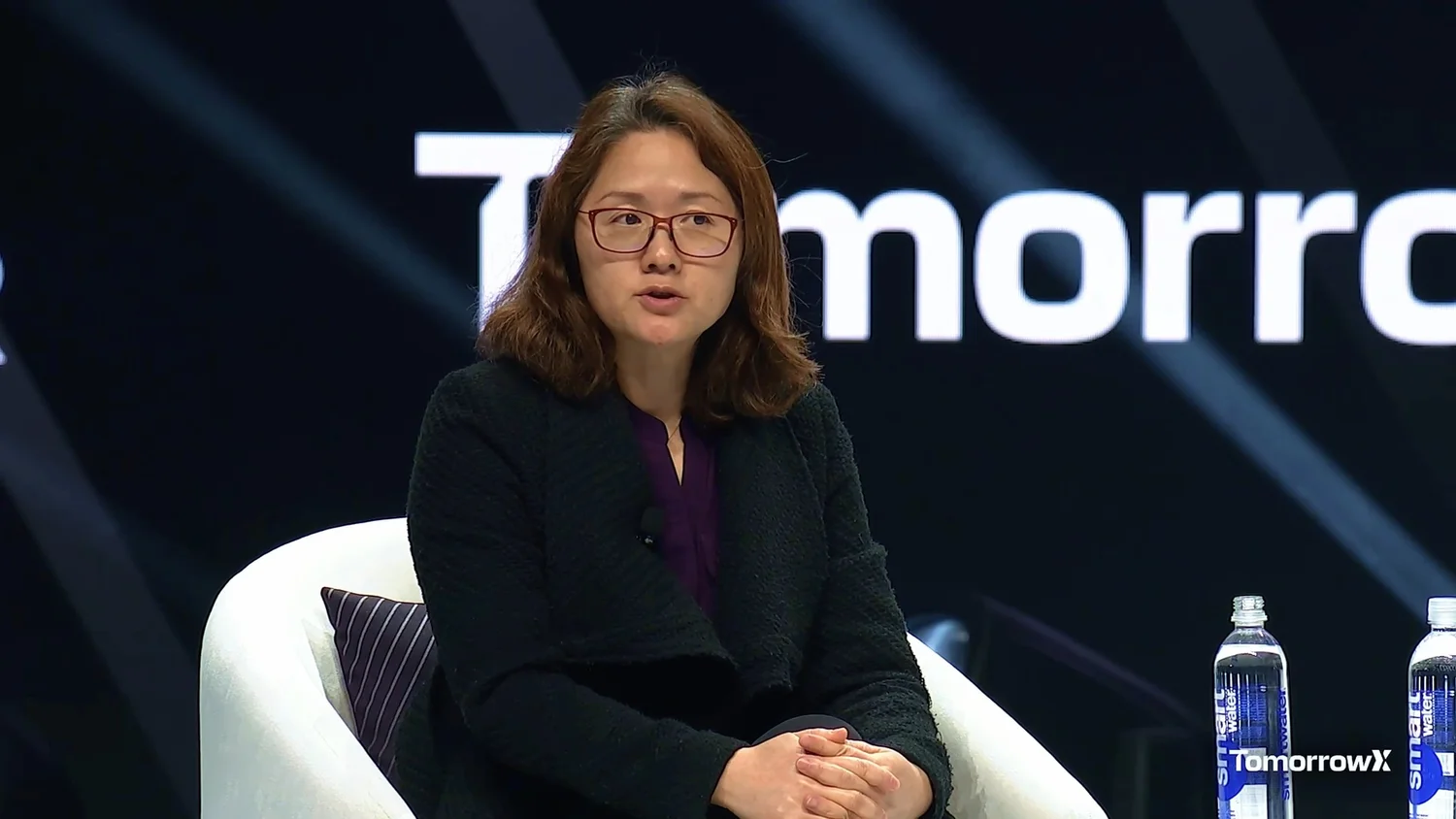
AUSTIN Two of the sharpest conversations at TomorrowX came from two women working on very different parts of the same question: what the AI era will actually look like. One is building the infrastructure that runs it. The other studies the human brain that has to navigate it.
Lin Qiao: “Bespoke model, bespoke deployment”
Lin Qiao, CEO and co-founder of Fireworks AI, joined Benchmark General Partner Eric Vishria and Atreides founder Gavin Baker on the Main Stage on Tuesday and opened with a prediction.
“Cost of using AI will reduce by 100 times in the next 2 years, but the consumption of those tokens will increase more than 1,000 times.”
Her reasoning starts with how adoption is changing. “We’re going through waves of adoption,” she said. “Most of adoption of AI are through the product which is human-facing, and the next wave will through the agent collaborate with each other.”
In that next wave, agents are “communicating and solving tasks at machine speed. There’s no human loop, and that is coming.” For that to work, she said, “the cost reduction per task has to significantly go down, and we definitely know we can deliver that.”
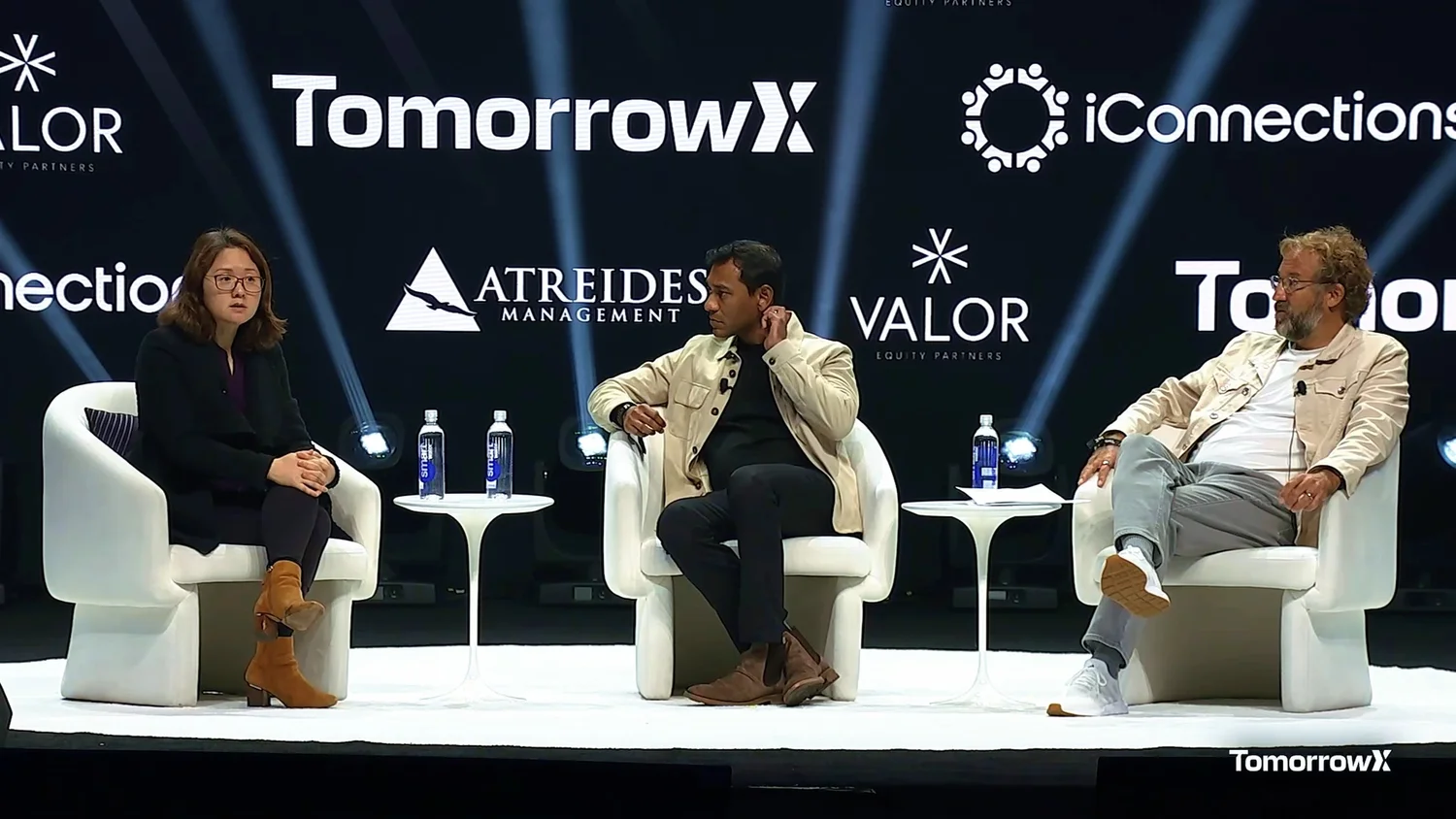
Baker brought it down to earth: “Do you think in the next year I’m gonna be able to use Fireworks to take an American open source model and train a Baker family model on the value systems that are important to me?”
Qiao’s answer pointed to where Fireworks is headed. “We’re building towards a future where specialized intelligence will be fully automated to reflect your unique taste judgment,” she said. “I definitely have full commitment into building on top of open models where it’s fully steerable to your individual judgment and taste.”
That shift is already showing up in the company’s numbers.
“This is bespoke. Bespoke model, bespoke deployment. I think more than 80% of the traffic goes that way… In the past 6 months, that portion alone has grown by 5X.”
Laura Harrison: You become what you think
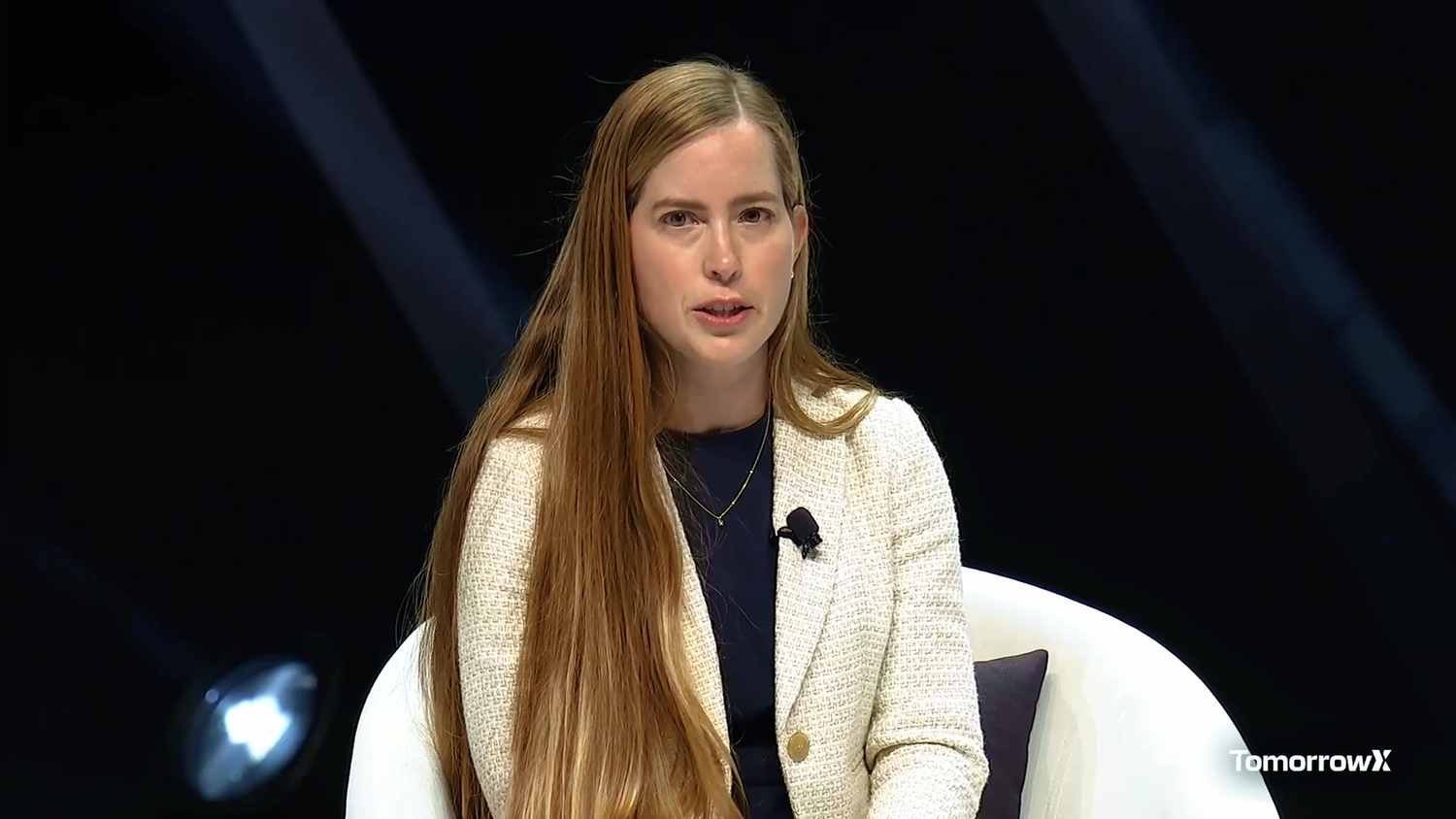
Laura Harrison, PhD, leads neuroscience at Valor Equity Partners, where she heads the firm’s 20 Watts decision-engineering program, built with Valor founder and CEO Antonio Gracias. Before joining Valor, she was Chief Science Officer at psyML and spent a decade as a research scientist at Caltech and USC’s Brain and Creativity Institute.
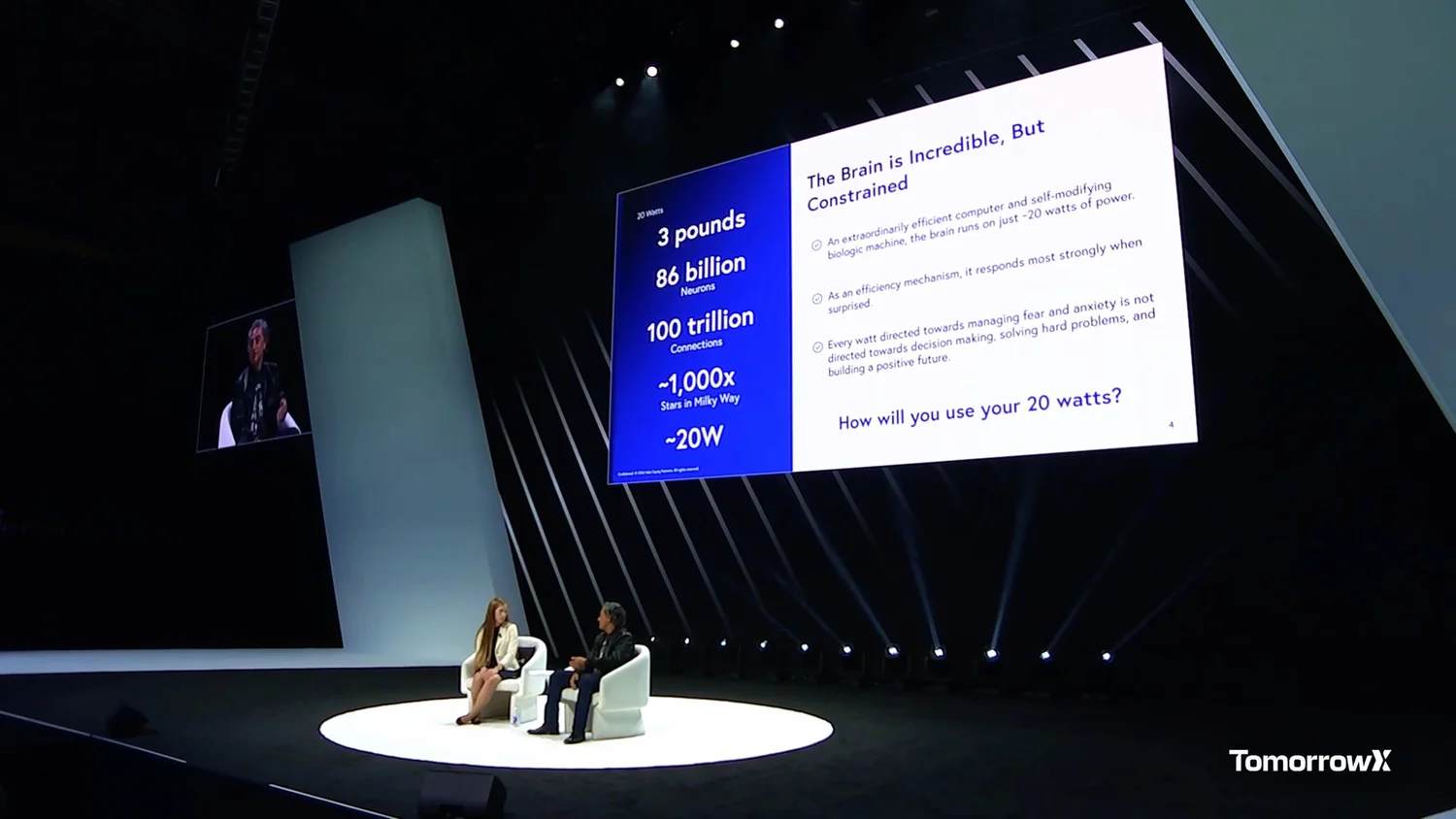
On Wednesday morning, Harrison sat down with Gracias on the Main Stage for “20 Watts: Lessons from SpaceX and Tesla.” The title comes from the brain itself, which runs on about 20 watts, and from the idea that fear shunts that power away from thinking and toward survival.
Harrison connected the technology on display all week to the people using it. “When we pair the ability of the human brain to approach problems and opportunities with creativity, intelligence, and importantly connection,” she said, “I think that we will be able to really build a huge tree and expand the set of what we can do to help broaden that dream for all Americans.”
“Aristotle was right. You do become what you do. However, because of what we’ve learned about neuroplasticity, you become both what you think and what you do.”
“Your thoughts really do matter,” she said. “How you approach problems really does matter, and it’s important to not limit your actions, your upfront, your decision tree, by limiting your thoughts.”
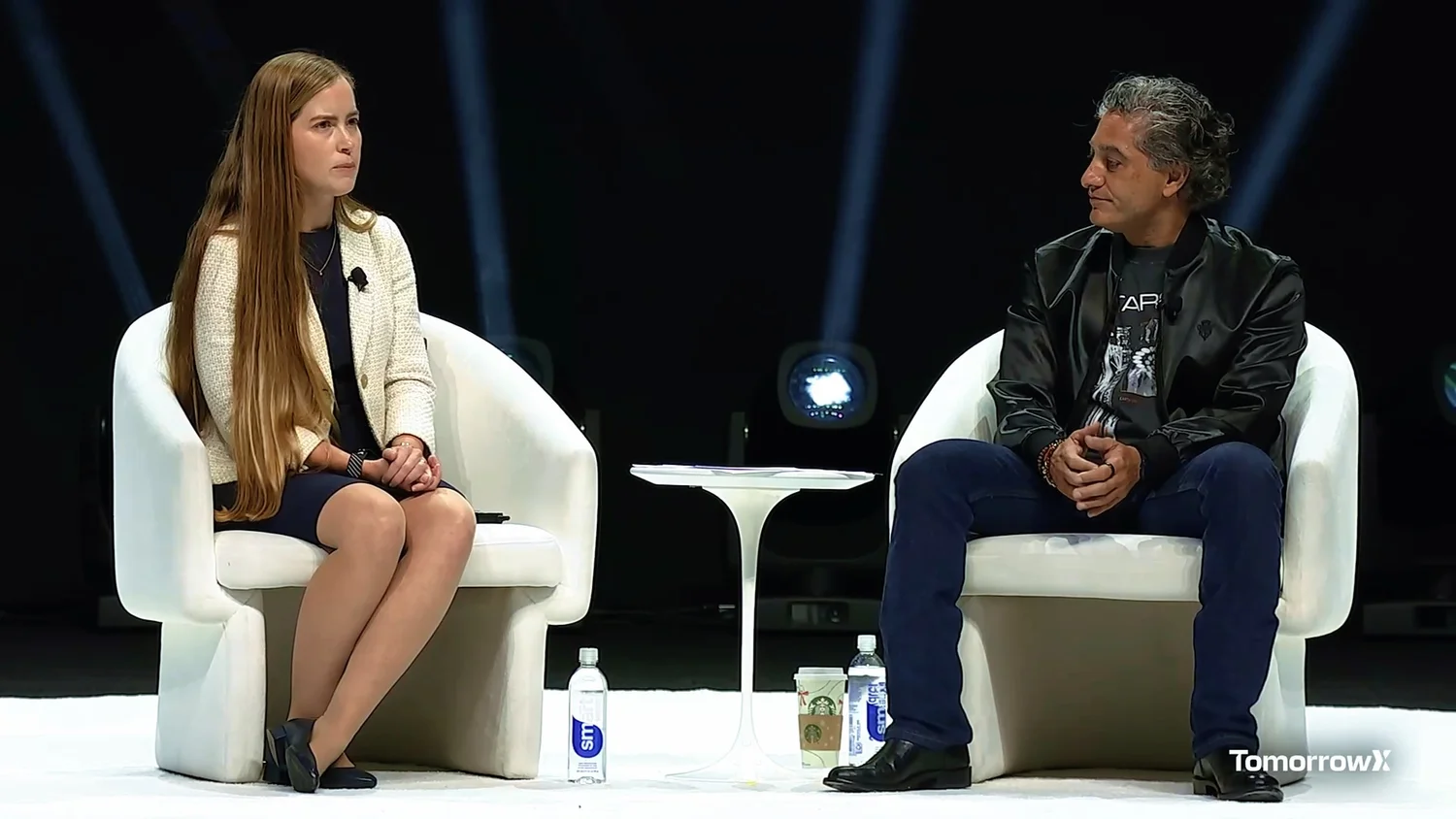
Gracias picked up the thread. “You will make the world you live in,” he said. “If you’re always in fear states and not about the positive future, that will just become self-fulfilling. If you wanna live in a future that’s positive for humanity and positive for yourselves and for your families, you gotta conceive that positive future to make it happen.”
And on why so many people feel uneasy about AI right now, he pointed to what can’t yet be seen: “They’re anxious about the future of AI because there’s an event horizon.”
The takeaway
Qiao and Harrison came at AI from opposite ends. One is making intelligence cheaper, faster and more personal, model by model. The other is focused on the 20-watt computer in our heads that decides whether we meet that future with fear or with creativity. Together, they made the same point: what comes next will be shaped by the choices we make, in our technology and in how we think.
 More from TomorrowXElon Musk at TomorrowX: AI Must Be “Maximally Truth-Seeking”
 More from TomorrowXTomorrowX Day 1: An AI Boom, Bubble Talk, and Compute in Space
 More from TomorrowXBlackstone’s Jon Gray on AI’s Blue-Collar Boom
 More from TomorrowXTokens Are Dirt: Arm, Micron, CoreWeave, Cerebras and The Boring Company on Building AI’s Physical World
← All coverage