AIInfrastructureTomorrowX 2026November 2026
Tokens Are Dirt: Arm, Micron, CoreWeave, Cerebras and The Boring Company on Building AI’s Physical World
Chips, memory, heat, financing and tunnels. At TomorrowX, the companies building AI’s physical foundation explained what it takes to keep up, and what all that compute is ultimately for.

AUSTIN Everyone talks about AI as software. At TomorrowX, the companies that build its physical foundation talked about dirt, heat, debt and concrete.
Over two days in Austin, leaders from Arm, Micron, CoreWeave, Cerebras and The Boring Company explained what it takes to keep up with AI’s demand for compute, from the chips and memory inside the data center to how it gets financed, and what happens when AI leaves the screen and starts digging tunnels.
Tokens are dirt
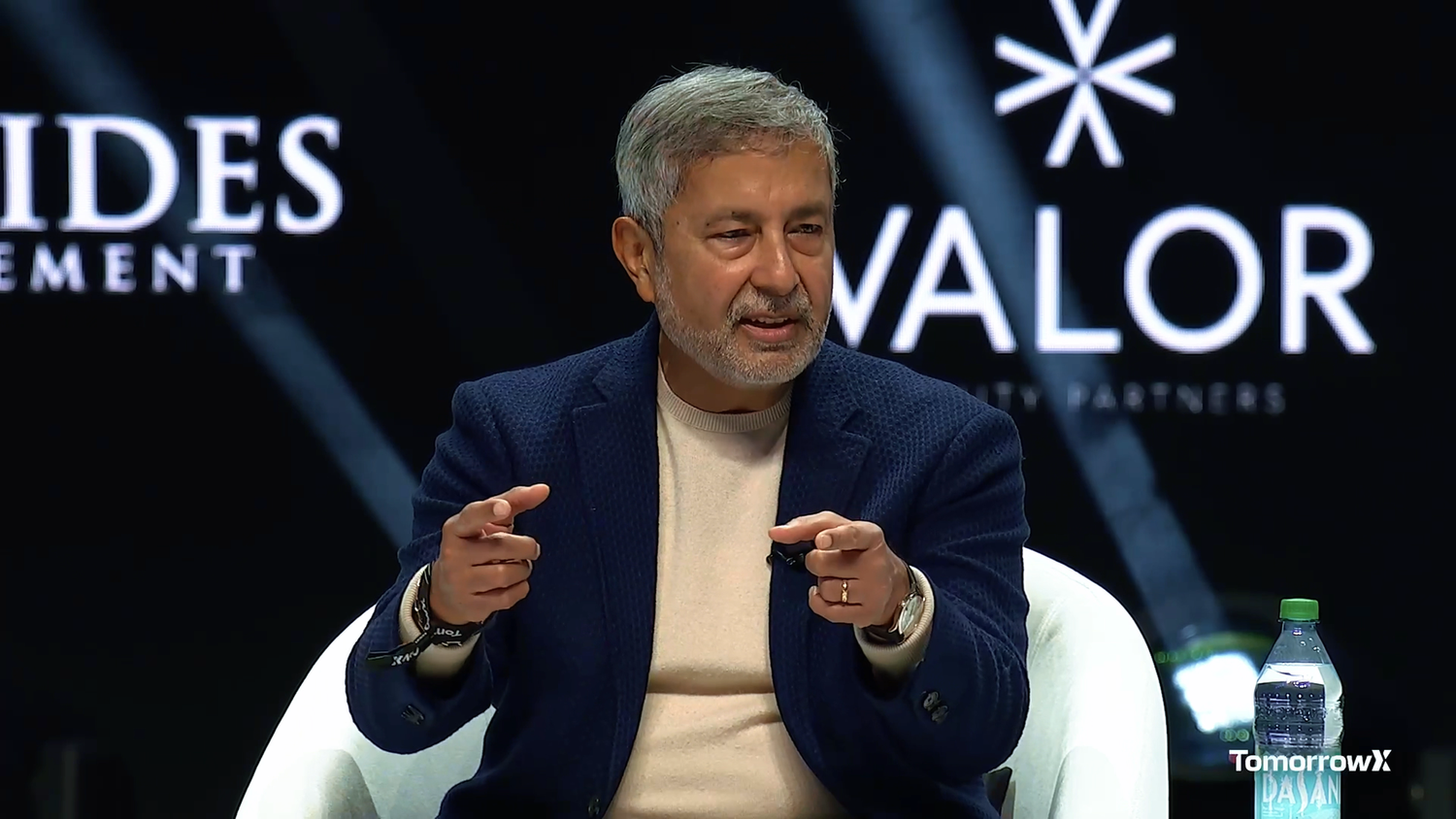
Arm CEO Rene Haas said his company’s secret superpower is where it started: Arm was born to run off batteries. Its CPUs, he said, match the performance of the speaker before him at half the power. Then he explained why AI agents are driving demand for CPUs, not just GPUs, with a construction site.
“Imagine that you’re at a construction site and the tokens are dirt. All of this dirt is being brought in by dump trucks.”
Workers with shovels have to move that dirt, he said, and as agents bring in more and more of it, humans can’t keep up. CPUs manage that work. CPU demand was always necessary, Haas said, but now it “just goes way, way up.”

The heat problem
Moderator Gavin Baker of Atreides opened the Micron session with a contrast: 95 percent of people in China are optimistic about AI, while many Americans are scared of it. What is AI doing for ordinary Americans today? CEO Sanjay Mehrotra pointed to the doctor’s office, where AI scribes update records so physicians can spend more time with the patient instead of the screen.
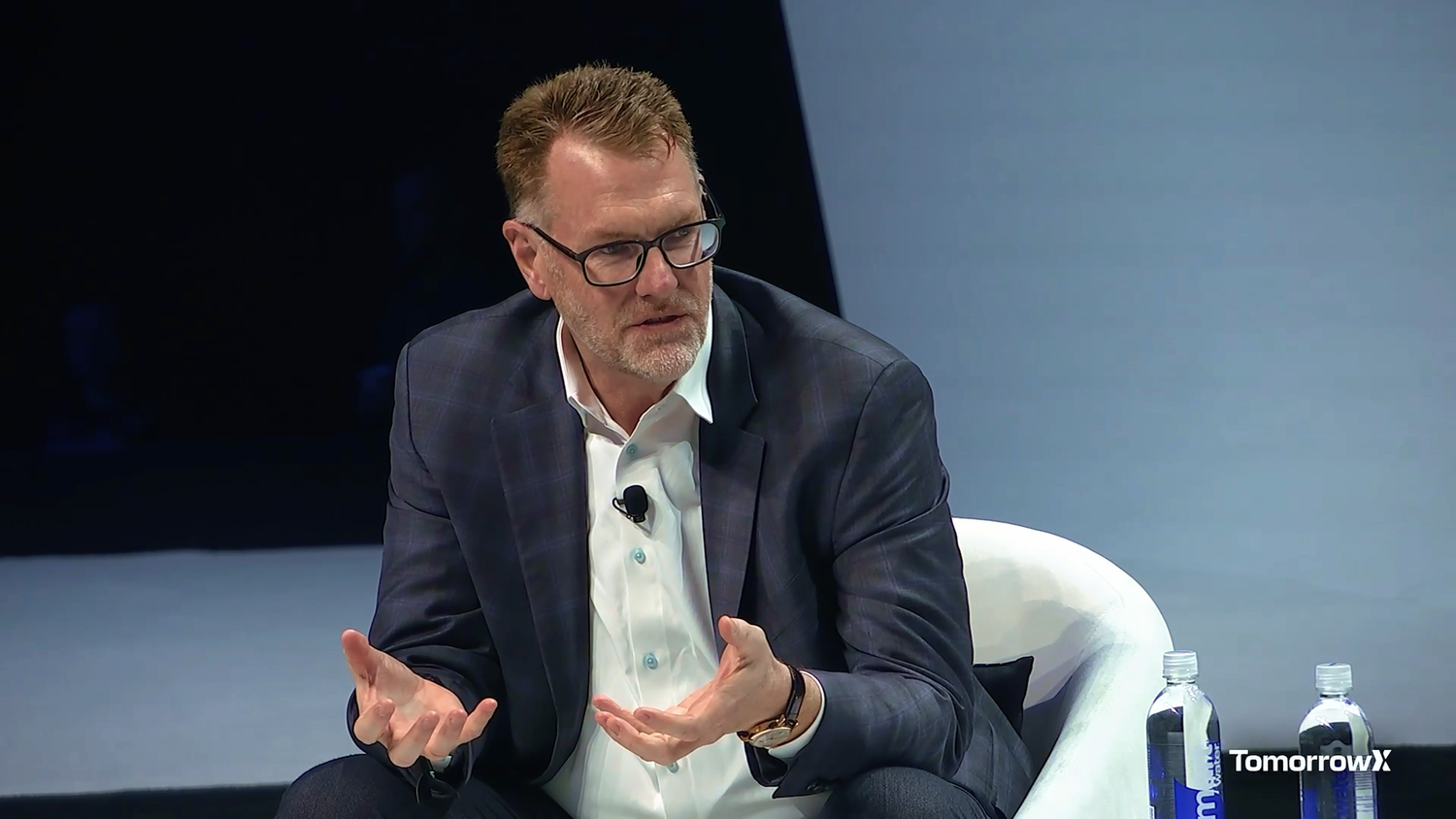
As CEO, he said, his part is building manufacturing in the U.S., creating jobs, investing in the workforce, and making memory that uses less power and performs better. The engineering challenge is heat. High-bandwidth memory sits right next to the GPU, and these systems run hot, so the whole memory stack has to be designed to manage it.
“It’s a major technology challenge. The winners in this game will be a major business.”


Financing AI like a gas terminal
CoreWeave co-founder Brannin McBee was asked whether compute will ever trade like a commodity, with futures. In a sense, he said, CoreWeave already does it synthetically. Its long-term take-or-pay contracts lock in revenue and an implicit price, so lenders know exactly what they are getting.
“Our backlog fully funds the entire debt stack across the business today.”
McBee, who came from the oil and gas world, compared it to building liquefied natural gas terminals: line up long-term customers for the output, take those contracts to lenders, and build. It has worked for scaling, he said, and CoreWeave will keep doing it. What excites him most is personal: AI that adapts to each person, including in medical care, “in a way that has never been accessible.”


Fast tokens
Cerebras CEO Andrew Feldman started with NVIDIA’s Jensen Huang, days before Huang’s return to the company. For an entrepreneur, Feldman said, Huang is the dream: someone who built a company over decades into the most valuable on Earth, and the best CEO in the business, “and I don’t think there’s debate about that.”
Feldman said Cerebras works with its data center builders in communities across the U.S., and there is no reason a data center can’t be a good neighbor. His pitch was speed.
“Fast tokens plus frontier intelligence create enormous value.”

Fast tokens carry the highest margins because they are the most valuable to the buyer, he said. That is why, in the last six months, Cerebras signed AWS, Microsoft and Oracle to resell them. He ended on education. For thousands of years, he said, we have known the best way to teach a child is individual tutoring, and chose not to do it because it is expensive. AI can now explain an idea to an 8-year-old a dozen different ways.
“It can deliver what a tutor delivered the wealthiest, most elite children throughout history, and that, for me, is something that’s available to everybody.”
Zero people in the tunnel
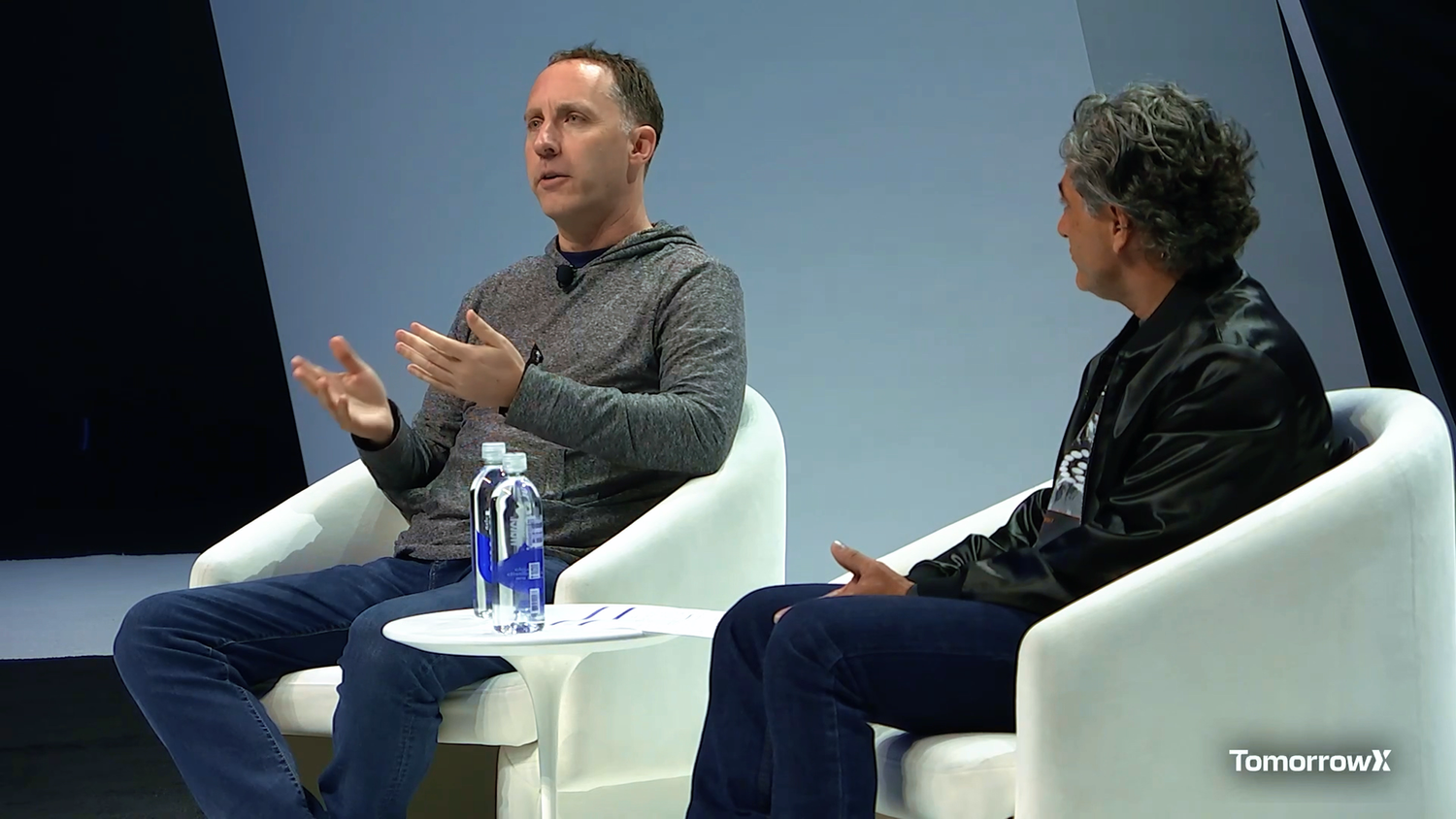
Boring Company President Steve Davis, speaking with Valor Equity Partners founder Antonio Gracias, said the old way of tunneling put a person inside the machine, and that is the mistake. Once a person is aboard, half the machine becomes a safety system, and everything slows down. One of the company’s key goals is ZPIT: zero people in tunnel.
“AI basically steers the machine, tells it what to do, drives all the systems.”
Workers move out of the tunnel and into control rooms to monitor, which makes for the safest and fastest possible machine. A Boring Company tunnel generally costs less than a road, he said, and it frees up land on the surface for parks. The Vegas Loop alone has taken about 1.1 to 1.2 million yards of concrete and moved 30 million yards of dirt, making it one of the biggest infrastructure projects in the country. By yards of concrete deployed, he said, Boring may already be one of the top three infrastructure companies in America.
Asked for advice for college students heading into a post-AI world, he gave the same answer he said he learned from Elon Musk: build physical things. AI makes building easier, but make sure there’s some metal in there.
“If you wanna have stuff, you have to make stuff.”
The takeaway
AI’s boom runs on very physical problems: CPUs to manage the dirt, memory that doesn’t overheat, contracts that keep lenders comfortable, and fast tokens worth paying a premium for. The builders were also clear about who it’s for. McBee sees medical care built for each person, Feldman sees a private tutor for every child,, and Davis told the students in the room to make sure whatever they build has some metal in it. However big AI gets, someone still has to make the thing.
 More from TomorrowXElon Musk at TomorrowX: AI Must Be “Maximally Truth-Seeking”
 More from TomorrowXBlackstone’s Jon Gray on AI’s Blue-Collar Boom
 More from TomorrowXThe Women of TomorrowX: Lin Qiao and Laura Harrison
 More from TomorrowXTomorrowX Day 1: An AI Boom, Bubble Talk, and Compute in Space
← All coverage