AIVenture CapitalSpaceTomorrowX 2026November 2026
TomorrowX Day 1: An AI Boom, Bubble Talk, and Compute in Space
In Austin, Valor's Antonio Gracias made the case for an AI boom built on human well-being, Atreides' Gavin Baker warned against a bubble, and SpaceX CFO Bret Johnsen laid out why the cheapest compute may one day be in orbit.
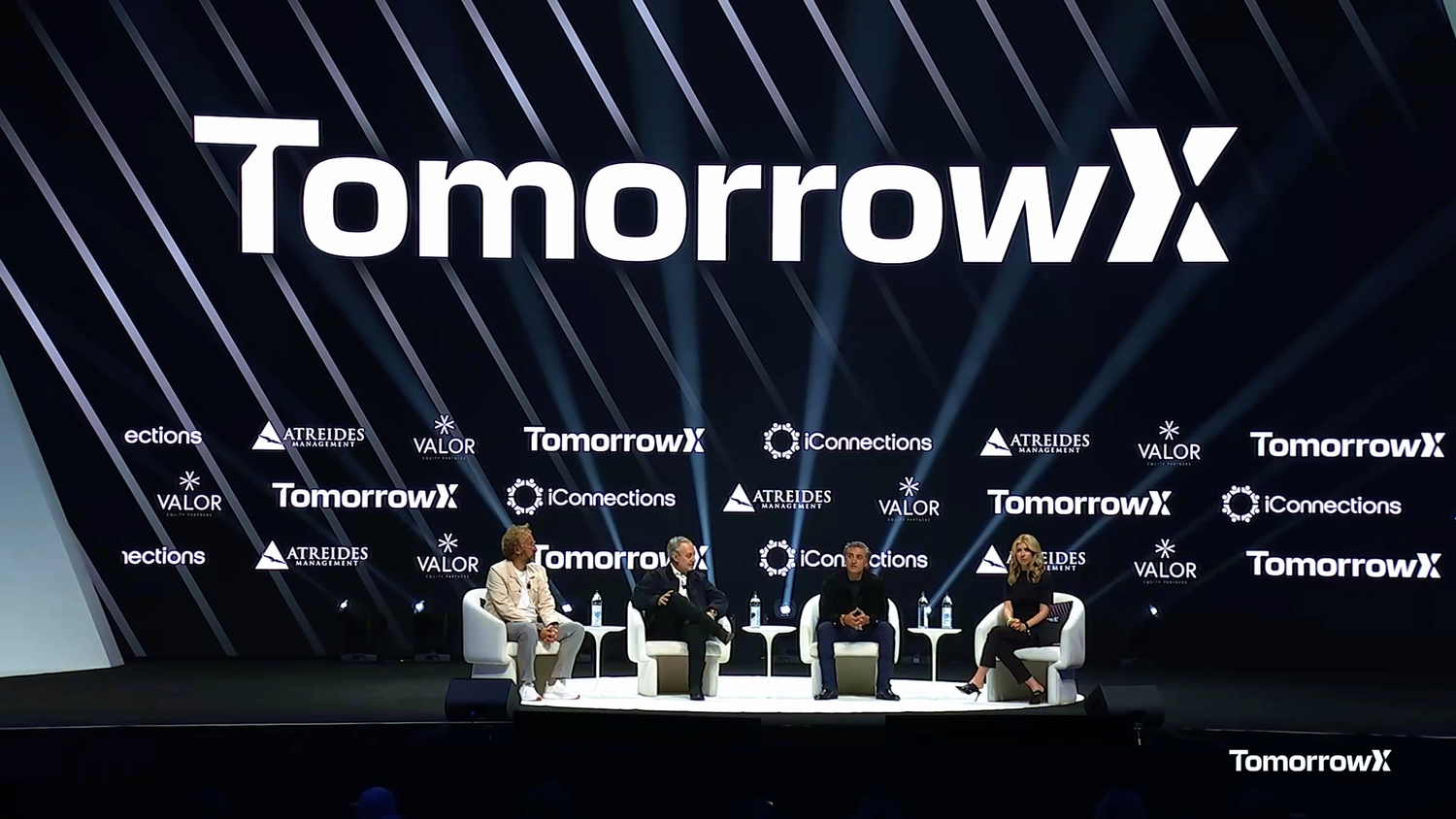
AUSTIN If one idea ran through the first day of TomorrowX, it was scale: how much AI could change, how fast the money behind it should move, and where all that computing power will physically live.
The opening session: "P(doom)" to "P(boom)"
TomorrowX opened Tuesday morning with a main-stage conversation moderated by CNBC's Sara Eisen. On stage were Antonio Gracias, founder, CEO and CIO of Valor Equity Partners; Gavin Baker, founder, managing partner and CIO of Atreides; and Ron Biscardi, CEO and co-founder of iConnections, the company behind TomorrowX.
Gracias took the floor and kept it, with one message.
"The message I want to give people here is creativity. In prior booms in our lifetime, we've seen productivity go up a lot. This isn't just productivity — this is actual productivity and creativity."
He pointed to the past month as proof: "We have seen cars fly and rockets land."
"Well, that was one company," Eisen noted.
Gracias didn't slow down: "If that's not the future, what is the future?"
Past periods of major technological change, he argued, "are all built on human misery." This one can be different: "This is a period where you're gonna have an unleashing of human productivity and creativity built on human wellbeing." His examples were practical: AI that gives caregivers and doctors more time with patients, speeds up scientific discovery, and gives people "less time for commuting and less time at work."
His goal, he said, is to move people "out of sort of the P(doom) state into the P(boom) state."
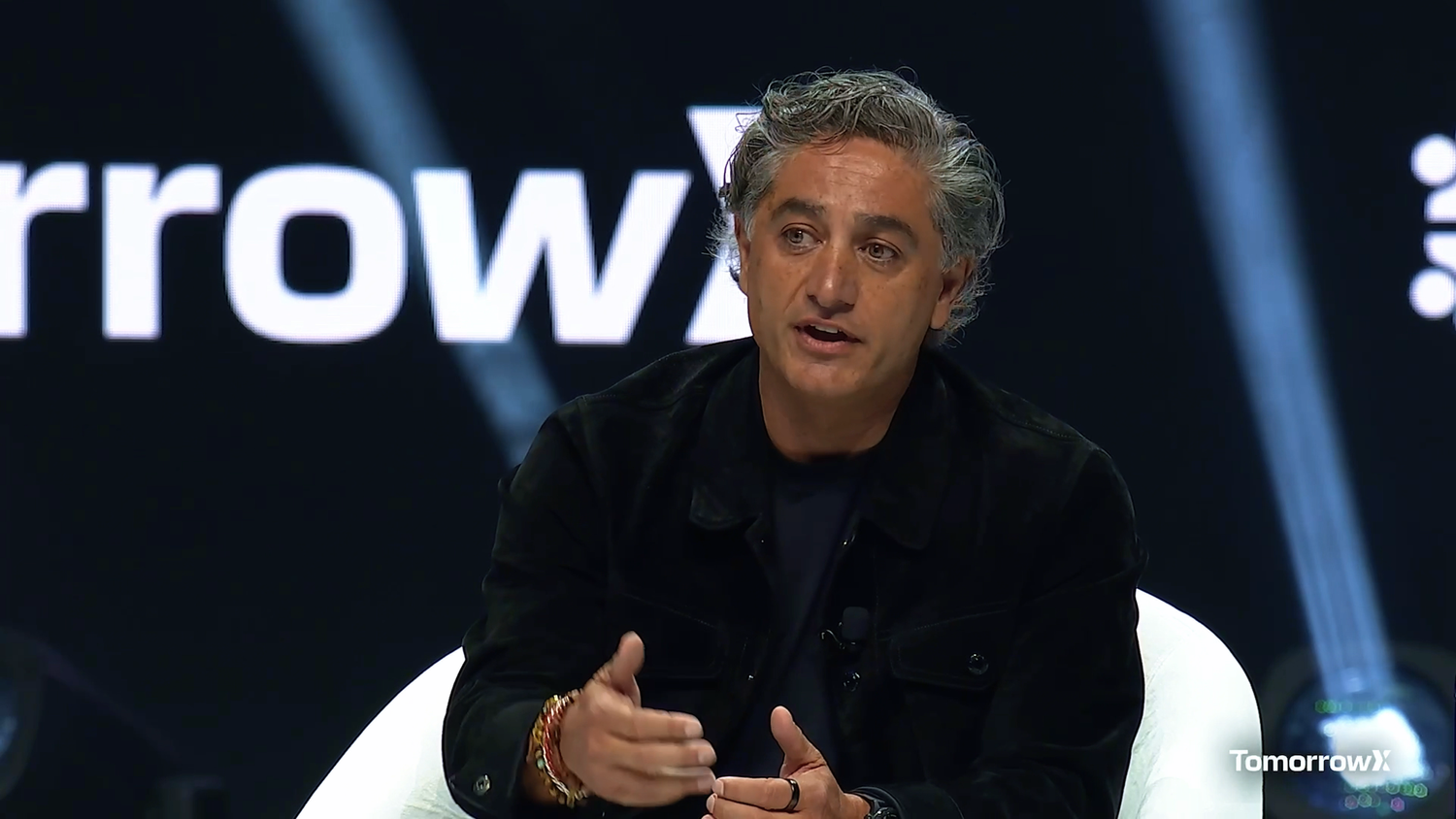
Gracias said Valor joined TomorrowX as Baker's partner "if there's a mission that really matters," and described that mission as reviving the American dream. He was candid that AI isn't reaching everyone yet. He cited a median income of about $87,500 and a poverty rate near historic lows, but said the hourly wage is "stuck where it was pre-COVID."
"There are many people in America that are rightfully feeling anxious about AI. It's not helping them. The question is: how do we get all the rest of America to feel like we feel?"
Baker: "The one thing no one wants is a bubble"
Baker turned to the market and argued for patience. If capacity were expanding 200%, he said, "we'd for sure get an overbuild. That is the history of the last four hundred years of capitalism."
"I just think we want slower, smoother for longer as opposed to a really, really sharp spike and then a crash, 'cause the one thing no one wants is a bubble."
"That would be terrible," Baker said. "We're certainly not in a bubble right now."
He named what he expects to be a pivotal week: "We're gonna turn over two or three really big cards this week, with Nvidia earnings tonight and the Anthropic IPO, I believe tomorrow. And those are big cards to turn over."
SpaceX: where the compute goes
That afternoon, Baker, who moderated much of Tuesday's main stage, sat down with SpaceX CFO Bret Johnsen to get at the question underneath all that AI spending: what it costs to power it, and where.
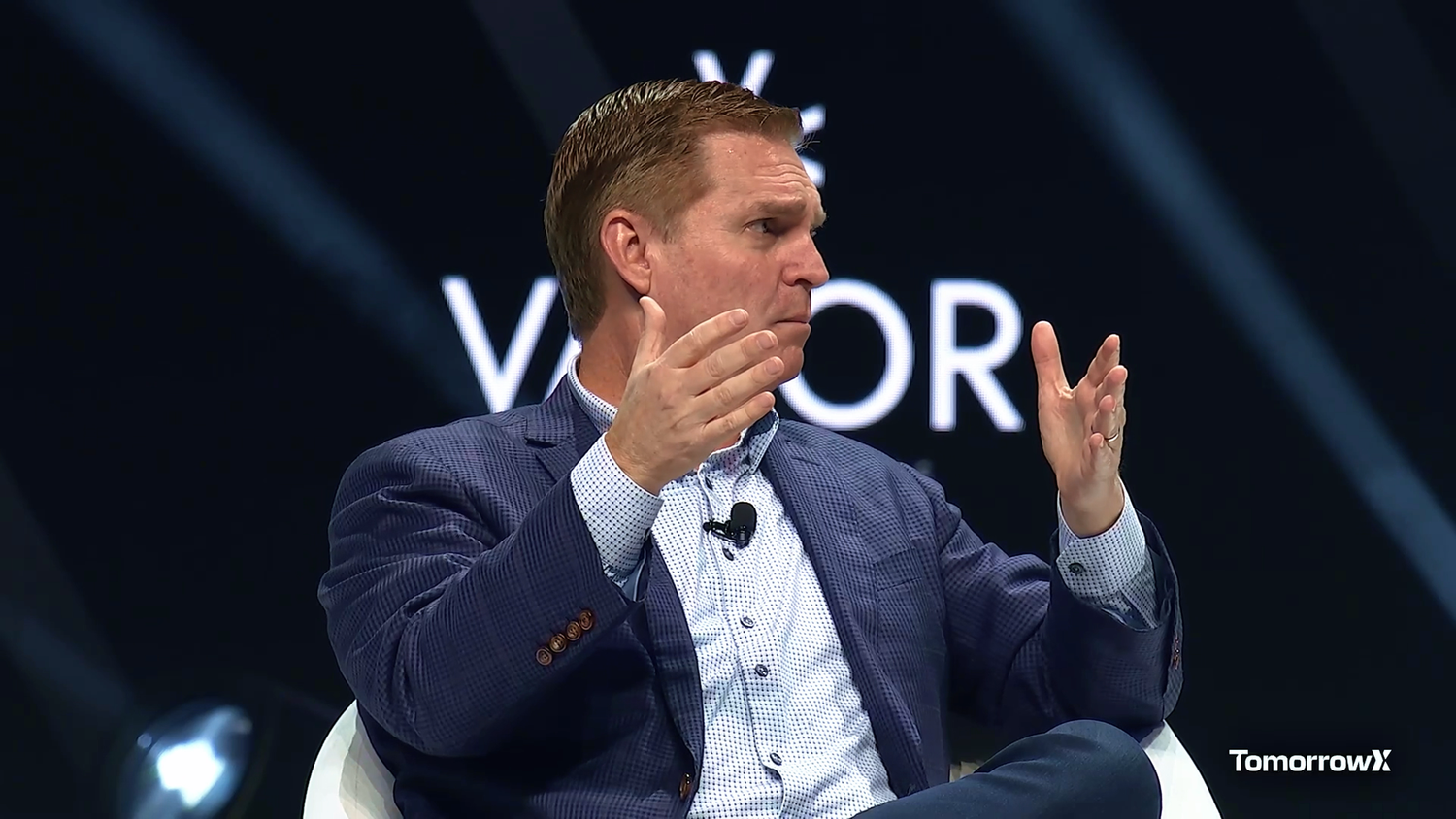
Johnsen started on the ground. Speaking about Cochise, he described what large-scale infrastructure can do for a community: lower utility and property tax bills, "money's gonna go to the school system in a meaningful way for decades," and "thousands of jobs generated."
"It's gonna change the entire community in a meaningful way," he said, "not just monetarily, but also from a capability perspective."
"It's really great," Baker said, before pressing him on the numbers: "What number do you think it's gonna cost to put a gigawatt of compute into the ground here on Earth in '28?"
On land, Johnsen said, costs are "very likely" to keep rising, while SpaceX expects to move down a cost curve. As silicon gets cheaper over time, the balance of the cost shifts toward operating expenses, which plays in SpaceX's favor in orbit.
"The operating cost in space is zero."

Reusability, then rapid reusability
"Where does this put us on the journey to reusability and then rapid reusability?" Baker asked.
"It opens up whole new markets for us," Johnsen said. The goal is "getting better and better per flight," with "another 10X improvement as far as cost per kilogram to space with this vehicle," and each flight costing little more than fuel and operations.
"Ideally over time, that same vehicle can fly, you know, day after day after day, just like an aircraft."
The takeaway
Day 1 at TomorrowX framed the AI moment as a question of scale. The investors on the opening stage want the boom to be broad and steady rather than a spike. SpaceX, in conversation with Baker that afternoon, is betting that the cheapest place to run it may eventually be off the planet.
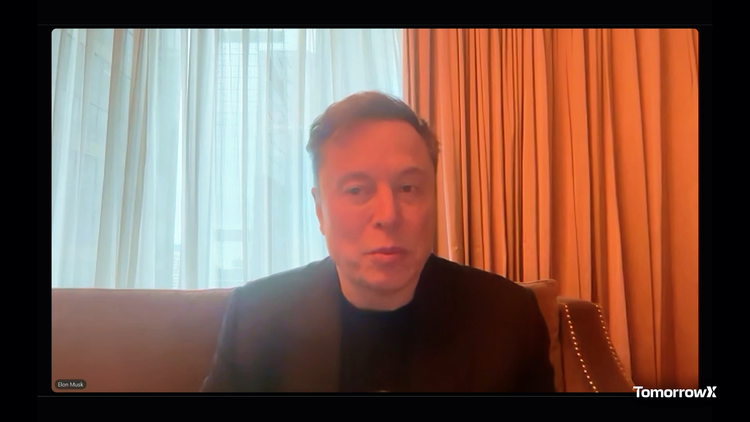 More from TomorrowXElon Musk at TomorrowX: AI Must Be “Maximally Truth-Seeking,” and Losing Jensen Huang Is “a Huge Blow” to NVIDIA
← All coverage