Fintech & Web3AISecurityStableCon 2026
“AI Has Broken Trust”: Tedd Huff and Socure’s Matthew Thompson on Fraud, Deepfakes and AI Agents in the Stablecoin Era
Faster money means faster fraud. On day two of StableCon, Tedd Huff asked Socure president Matthew Thompson what identity has to look like when scammers use deepfakes and AI agents move money for us.
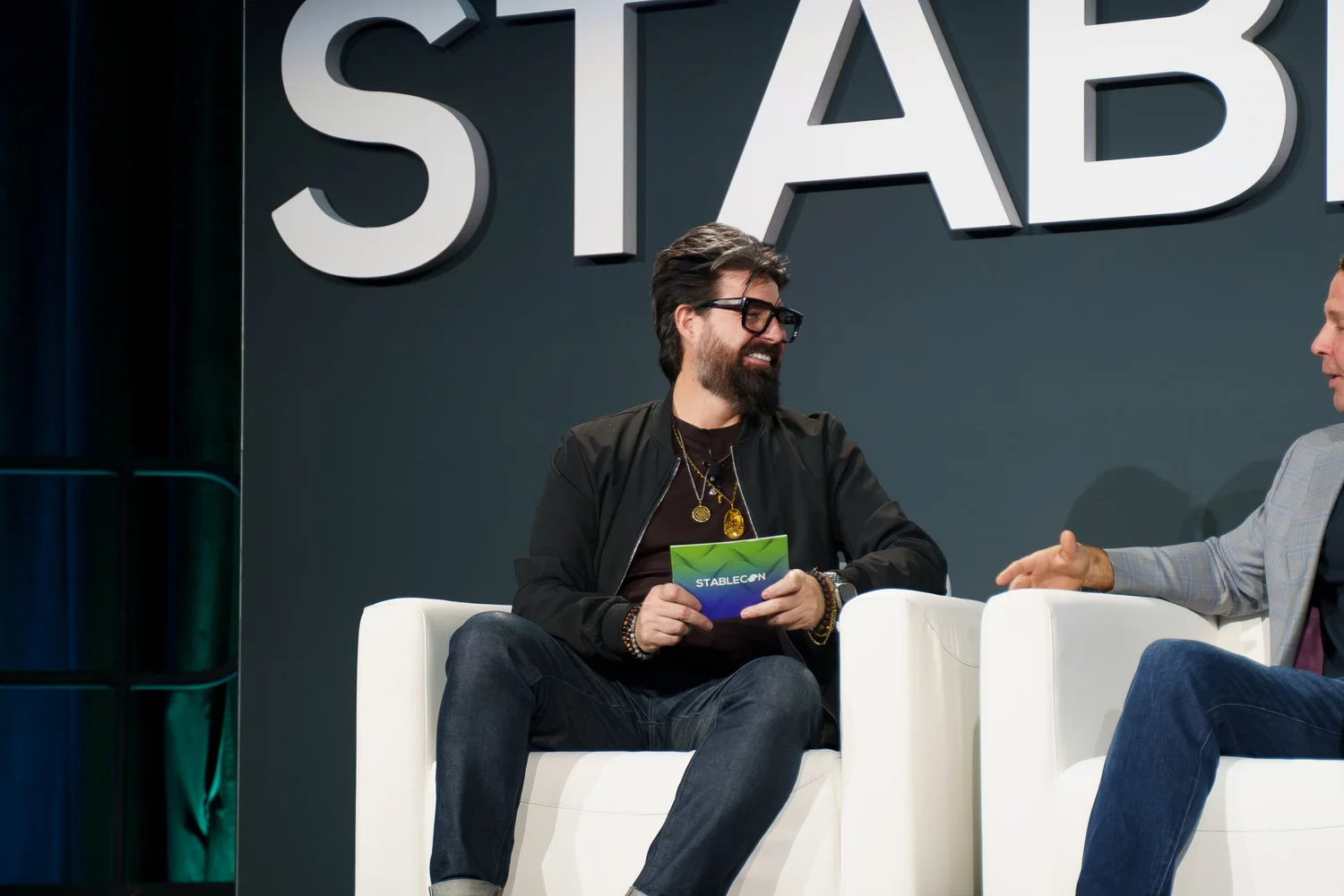
NATIONAL HARBOR, MD Stablecoins are being sold as infrastructure. Infrastructure has to know who is on the other end.
On the second day of StableCon, Tedd Huff, founder and CEO of Fintech Confidential and Voalyre, returned to the stage with Matthew Thompson, President and Chief Commercial Officer of Socure, the identity verification and fraud prevention company. Huff set up the stakes: the gap between trusted and untrusted is widening every day, and if stablecoins are going to work as infrastructure, value has to reach the right entity, sent by the person who actually meant to send it.
His question to Thompson was what has to be true about identity, fraud controls and cybersecurity for stablecoin growth to continue.
The back door is wide open
Thompson's answer started with how the industry has defended itself so far. Most of the effort has gone into the moment a customer opens an account.
"We put all the controls and the locks and the reinforcements around the front door, but it's like the back door is wide open, the windows are open."
Scams, he said, are now an extension of identity fraud: people unknowingly sending money to someone they believed was someone else. Account takeover is real, and the scams that enable it are global. Checking identity once at onboarding and assuming trust holds after that no longer works.
Fraud inside the building
Thompson described a second front that has grown fast: workforce fraud. Socure's relationship with Coinbase, he said, began on that side of the business. He pointed to the widely reported cases of North Korean operatives using deepfake technology to look and sound like someone else in job interviews, and getting hired by U.S. tech and crypto companies.
"Putting controls in place to make sure that the people you are hiring into your organizations are actually who they say they are is also important."
He cited a Gartner forecast that within the next couple of years, as many as one in four people a company hires may not be who it thought it hired. Huff's reaction drew a laugh from the room: "That's not scary at all, Matt."
Thompson's reply was not a joke. Think about what you are giving people access to, he said, and whether the person on your Zoom call is actually who they look and sound like.

When the customer isn't human
Huff then pushed the conversation to where payments are heading. Opening an account used to mean walking into a bank branch and handing over a driver's license. Now, he noted, the industry has traveled so far that AI agents are transacting on people's behalf.
"What does the life cycle of trust look like when humans aren't even involved anymore?"
Thompson prefaced his answer by saying it is all still being figured out. He had spent a day in New York that week with chief information security officers from several major banks, working on exactly this: how to trust agent traffic, and whether an agent is acting within the scope a verified human gave it.
Banks start from a hard position. Historically, he said, all non-human traffic was treated as bad and blocked, and many login controls are still built to reject it. Now banks and payment networks have to tell good agents from bad ones.
"The trustworthiness of the agent and the association of the agent with a real human and making sure that it's operating within parameters is paramount."

Programmable money, programmable fraud
Huff named the risk underneath it all. Programmability is what makes stablecoins powerful, and it also lets bad actors scale. Without tools to establish trust and stop them, faster money means faster fraud.
Thompson did not soften it. He said he was not trying to scare anyone, but the data Socure sees across roughly 4,000 customers shows fraud attacks growing in scale and sophistication.
"AI has broken trust on one hand, and so we've gotta be really thoughtful about how we rebuild that within this ecosystem."
Day one of StableCon was about whether banks would issue stablecoins. Day two, through Huff's questions, was about whether anyone can trust who is using them. The answer from Socure is that identity has to be checked continuously, for employees as well as customers, and for agents as well as people.