Fintech & Web3FoundersStableCon 2026September 2026
Bridge or BVNK, Built for Africa: Zynta’s Cairon Clarke on the Continent’s Stablecoin Decade
Sending $100,000 into or across Africa is still a headache. At the StableCon pitch competition, Zynta CEO Cairon Clarke made the case that regulated stablecoin rails, and the licenses behind them, are how that changes.
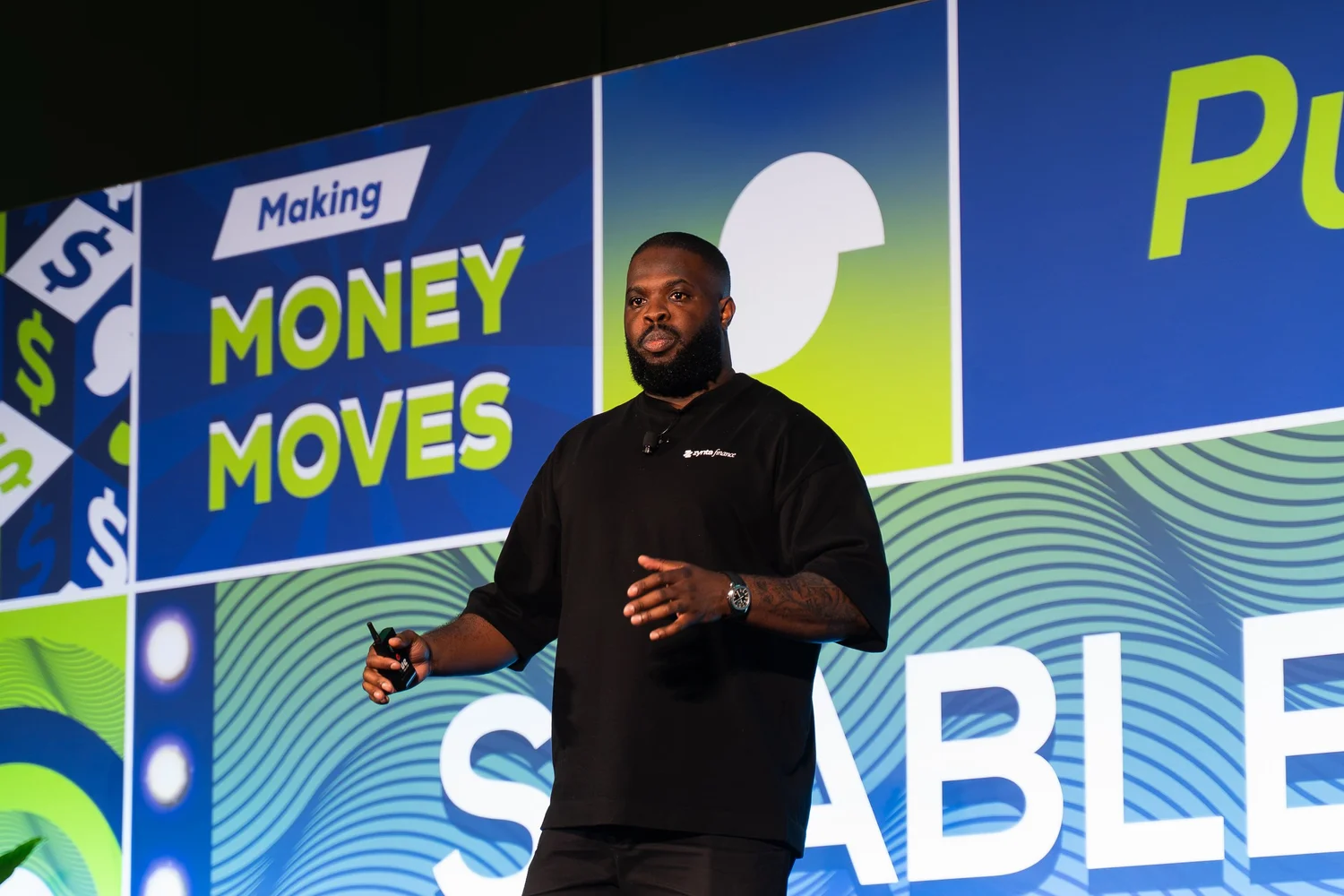
NATIONAL HARBOR, MD Cairon Clarke opened his pitch with a show of hands: who in the room had ever tried to send $100,000 or more into Africa, or between African countries?
"It's an absolute headache, and I can tell you that for free."
Clarke, CEO of Zynta, used his slot at the StableCon pitch competition to size the problem. On the consumer side, he put annual remittances at more than $150 billion. On the business side, cross-border trade runs past $2 trillion a year. And he expects Africa to have 500 million fintech users by 2030.
"Africa's stablecoin decade is just beginning."
The hard part is the last mile
Zynta's product is regulated stablecoin APIs for Africa. Neobanks, payment service providers, importers and exporters use it to send and receive money into and within the continent, while Zynta absorbs the compliance, licensing and liquidity problems they would otherwise face.
A partner sends local stablecoins. Zynta handles what Clarke called the hard bit: the last mile. Payouts land in bank accounts and wallets through Zynta's settlement bank partnerships, with know-your-customer and anti-money-laundering checks handled in-house.
He summed up the positioning in one line for an audience that knows the category well.
"We're essentially like Bridge or BVNK, but specifically focusing on the African corridors."
A regulatory moat, country by country
In payments, licenses are the product. Clarke walked through Zynta's:
- CanadaLicensed.
- NigeriaAmong the first entities in a pilot involving the Central Bank of Nigeria.
- LiberiaPayment service provider license.
- ZambiaAccepted into the country's new regulatory sandbox.
- NextClose to licenses in Senegal, Ghana and Kenya.
The numbers
Clarke said Zynta has processed almost $400 million in transaction volume. Over the last year, it generated more than $2 million in revenue from more than 160 clients, all live across ten corridors. Its partners include some of the largest companies in Africa, along with letters of intent from two of the continent's largest banks for a diaspora mortgage product.
The business model is simple: a fee on each API payment plus a small foreign exchange spread, blended at around 65 basis points. Zynta also offers compliance as a service, letting customers operate under its licenses.
Clarke also introduced the African Virtual Assets Forum, or AVAF, which Zynta convened to drive stablecoin adoption across the continent through its network.
Go deep where you have connections
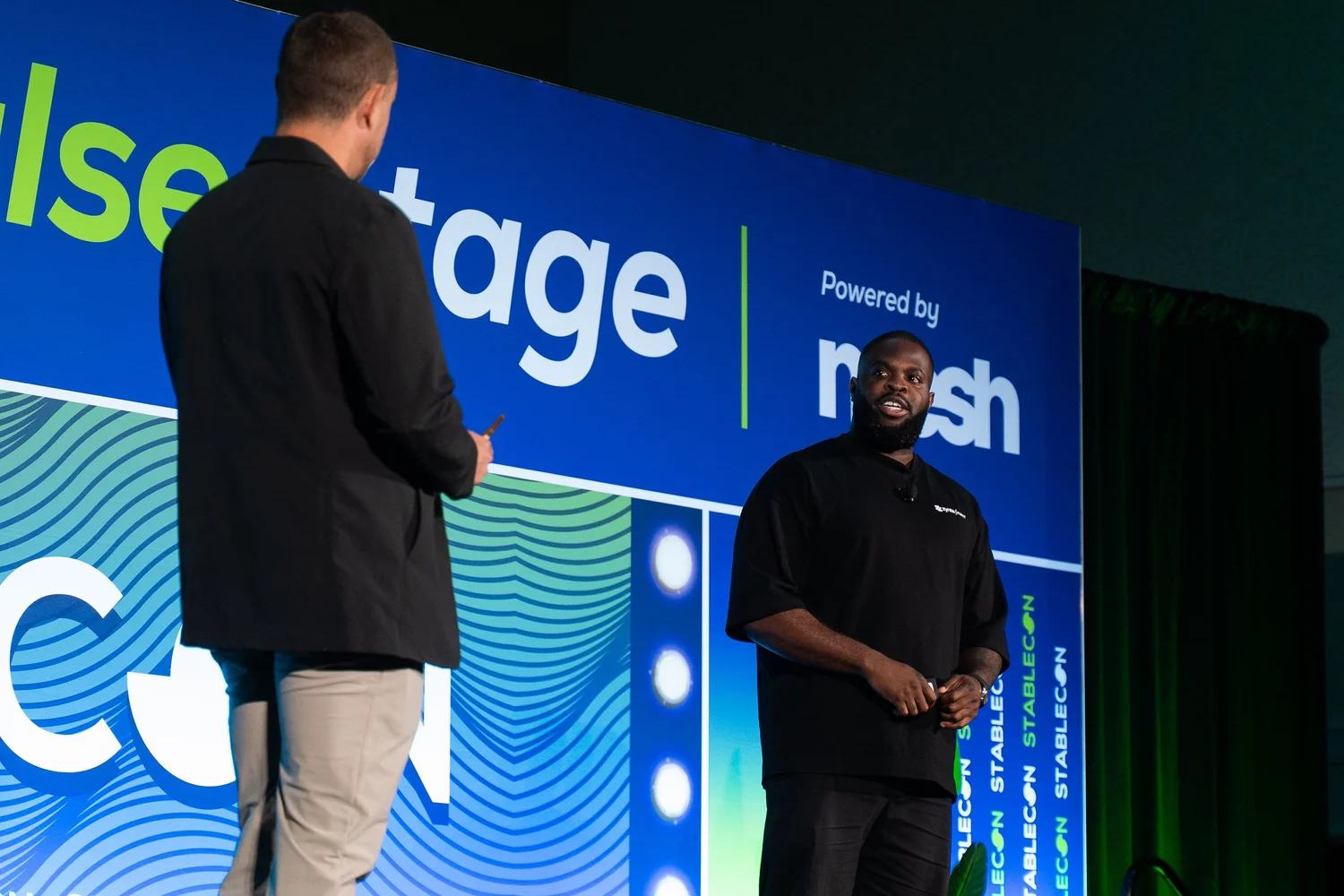
A judge asked how Zynta splits growth between product and distribution partnerships and direct sales. Clarke said the company goes deep where it already has relationships. Nigeria, one of the largest stablecoin markets in the world, came first because Zynta had both major enterprise customers and government-level connections there.
New markets follow the same rule: either a strong connection can fast-track a license, or large enterprise customers are already waiting. His business development team uses those conversations as a funnel to decide where to license next and where the volume is.
"Specifically looking at corridors that are hard, because that's where the biggest opportunities are currently."
His target is 15 African markets connected on a pan-African stablecoin system by the end of the year. Over five years, he expects almost every African business to settle locally and globally on stablecoin rails, instantly and compliantly. His pitch is that most of them will do it through Zynta.