Fintech & Web3FoundersStableCon 2026September 2026
OpenRouter Routes the Intelligence. Heron Routes the Money: Samir Addamine’s Pitch for Stablecoin Payments Without the Crypto
At the StableCon pitch competition, Heron co-founder and CEO Samir Addamine argued that the problem with stablecoin payments was never access. It is abstraction, coverage and workflow, and he built Heron around all three.
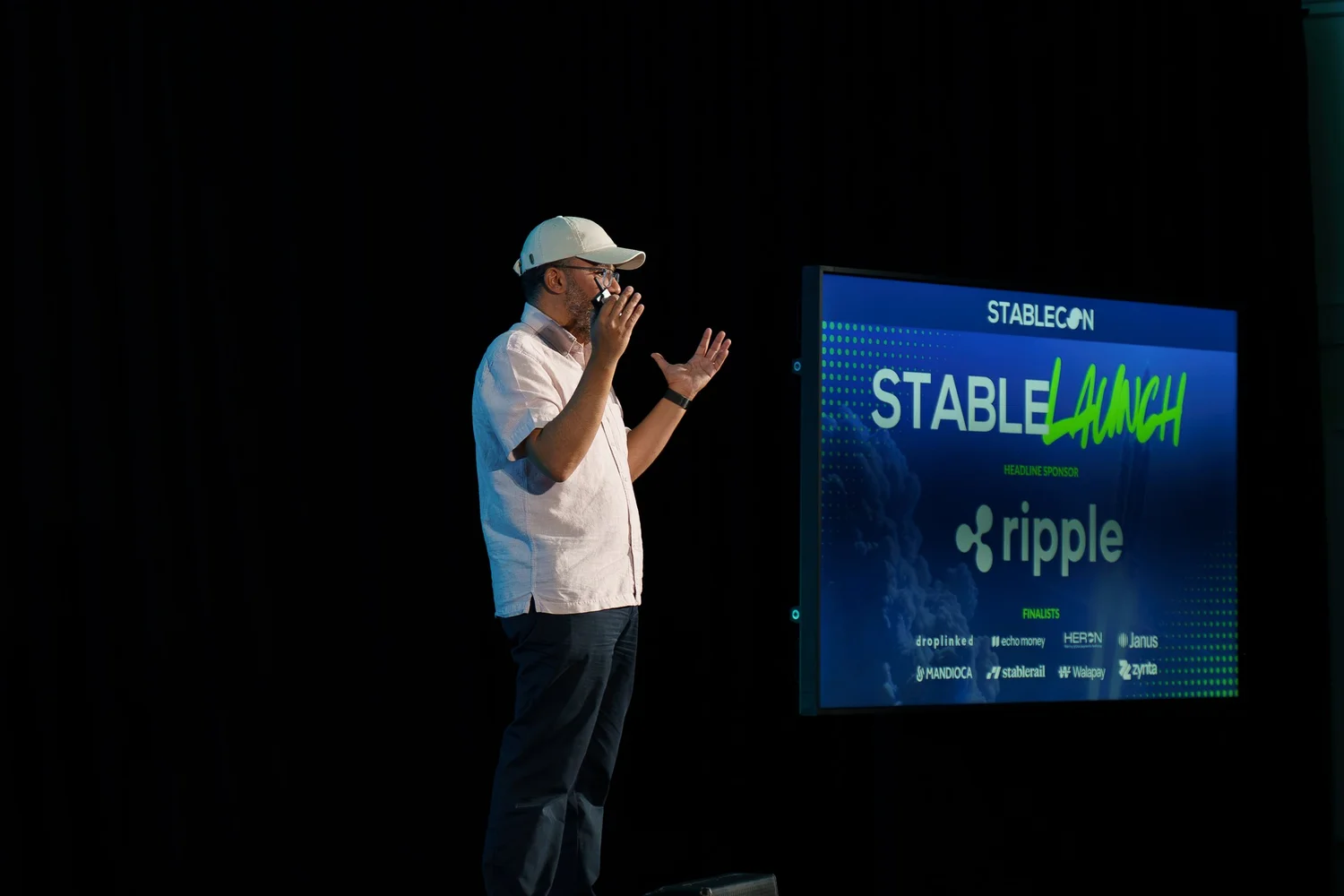
NATIONAL HARBOR, MD No single payment provider is best at everything. Samir Addamine is betting a company on that fact.
Addamine, co-founder and CEO of Heron, took the stage at the StableCon pitch competition with a simple observation about cross-border money: one provider is great in Brazil, another in Africa. One is cheaper, another is faster, another has deeper liquidity. No single rail gets every transaction the best execution.
"What we're building at Heron is one interface across them all. So Heron can find the best way to move the money."
He reached for a comparison any AI builder in the room would recognize. Developers today choose between hundreds of models and dozens of providers, and OpenRouter gives them one interface to pick the right one. Addamine believes payments are heading the same way.
"OpenRouter routes the intelligence. Heron routes the money."
Three asks from one customer
The idea came from a customer, not a whiteboard. In late 2024, Addamine began looking at crypto and stablecoins for cross-border payments. Early in 2025 he met the team at Bridge in San Francisco, was impressed by the product, and introduced one of his corporate customers. That introduction showed him the gap. The customer asked for three things.
- No cryptoNo wallet, no custody. Fiat in, fiat out, with the benefits of stablecoins underneath.
- CoverageThe company was moving money from Europe to several African countries, and no single provider could serve every corridor.
- No new portalPayments had to run inside the company's treasury and finance systems, for compliance and reconciliation.
The treasurer's request was the most telling. They did not want another portal. They wanted the money to move inside the system they already use, so compliance and data reconciliation stay in one place.
"The problem was not actually the access to stablecoin. The problem is abstraction, coverage, and workflow."
Those three asks became the foundation of Heron.
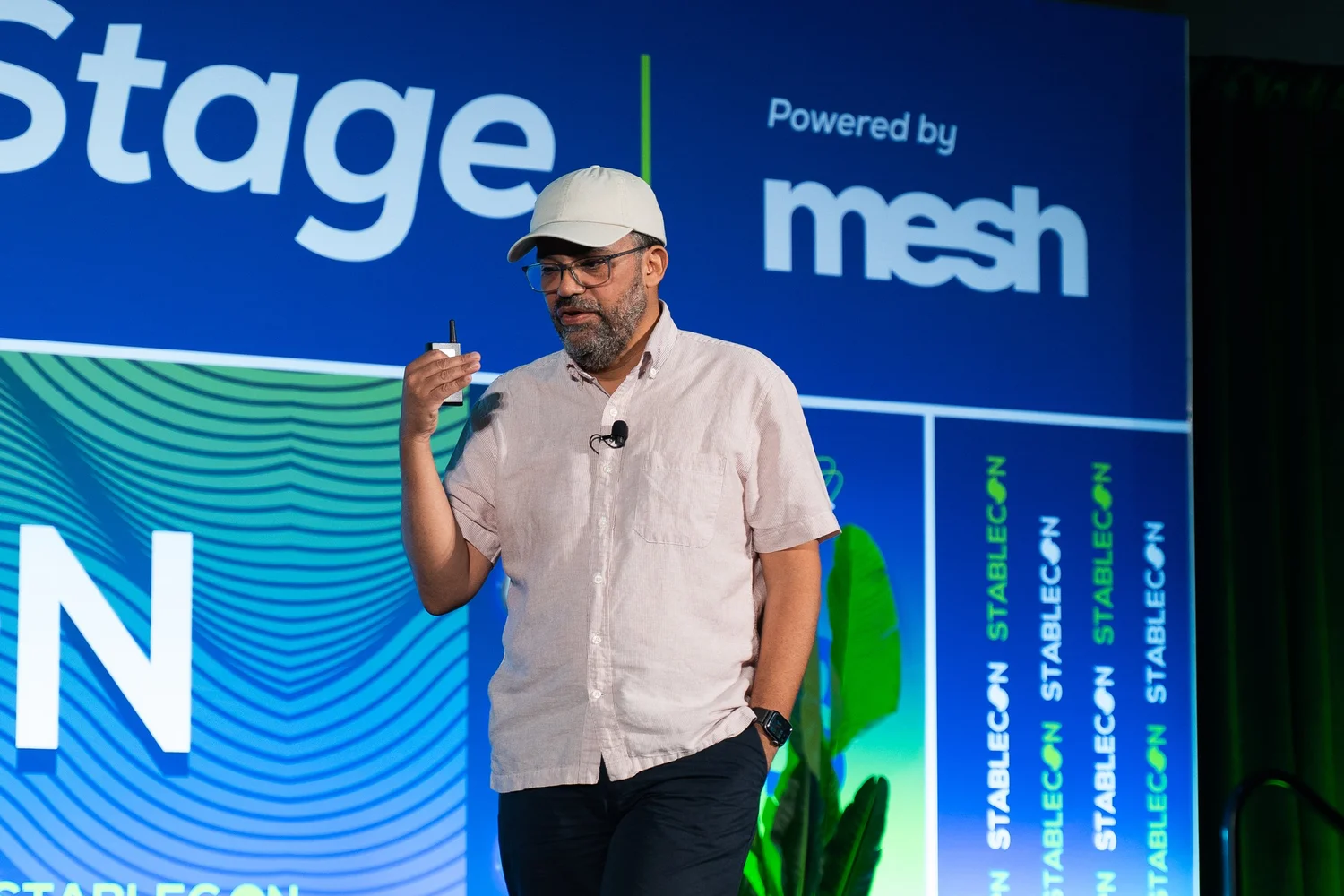
A million dollars, three routes and a backup
Addamine walked through a transfer. A company wants to send $1 million from the United States to the UAE. It tells Heron what matters: compliance, settlement speed, price and coverage, plus its own internal policies. Heron finds the best route, offers alternatives, and keeps a backup path ready in case the transaction fails.
On screen, that looked like three routes and one fallback. With so many providers in the market, Addamine said, there is always another way to get the money through.
Learning from every payment
The longer-term edge is data. After every transaction, Heron records what actually happened against what was expected. Did it fail? What was the real price? Was there enough liquidity?
"The more data we have, the more Heron is becoming smart in predicting tomorrow what is the best route before it even happens."
That is the pitch in full. Stablecoins promise faster, cheaper money movement, but finance teams do not want to manage wallets or juggle providers country by country. Heron hides the crypto, covers the corridors and plugs into the treasury stack. If the routing gets smarter with every payment, the customer never has to think about which rail is underneath.