Fintech & Web3BankingNewsStableCon 2026September 2026
The Morning U.S. Bank Launched USBDC: Jamie Walker Tells Tedd Huff Why the Bank Is Leaning In, and What Still Has to Be Solved
Hours after U.S. Bank announced its USBDC stablecoin on the Stellar blockchain, the executive behind it sat down with Fintech Confidential founder Tedd Huff at StableCon. Huff asked the two questions every launch invites: is the demand real, and who answers when something goes wrong?
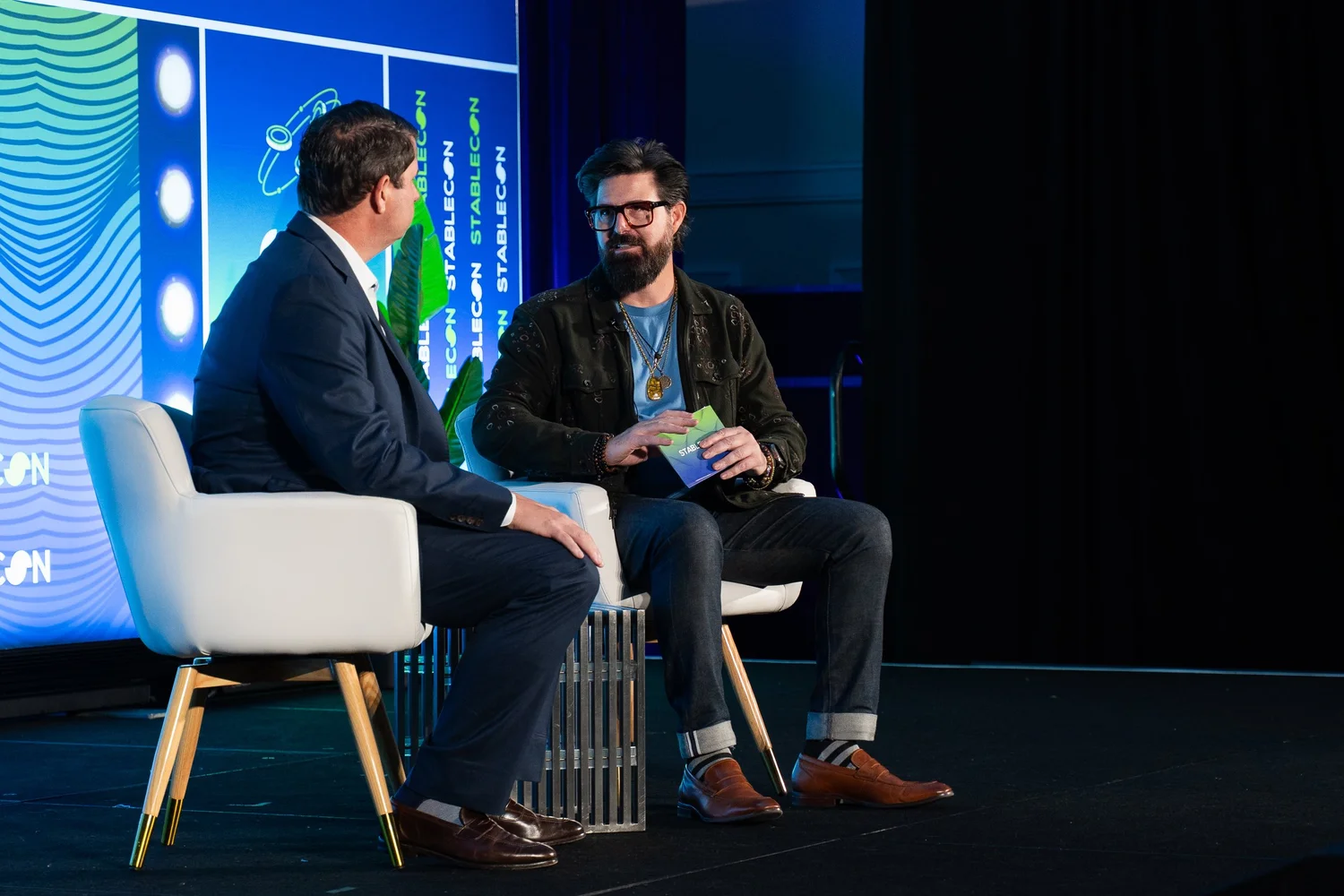
NATIONAL HARBOR, MD On the morning of September 9, U.S. Bank announced USBDC, its own U.S. dollar-backed stablecoin, issued on the public Stellar blockchain. By the afternoon, the man responsible for it was on stage at StableCon answering questions about it.
The bank described USBDC as one of the first bank-issued stablecoins deployed on a public blockchain. Its live pilot moved a cross-border payment between U.S. Bank entities in North America and Europe and tested minting, redemption, freezing and clawback, along with the bank's internally developed Digital Asset Platform. In the announcement, Walker called the pilot "another step forward in our broader digital asset strategy."
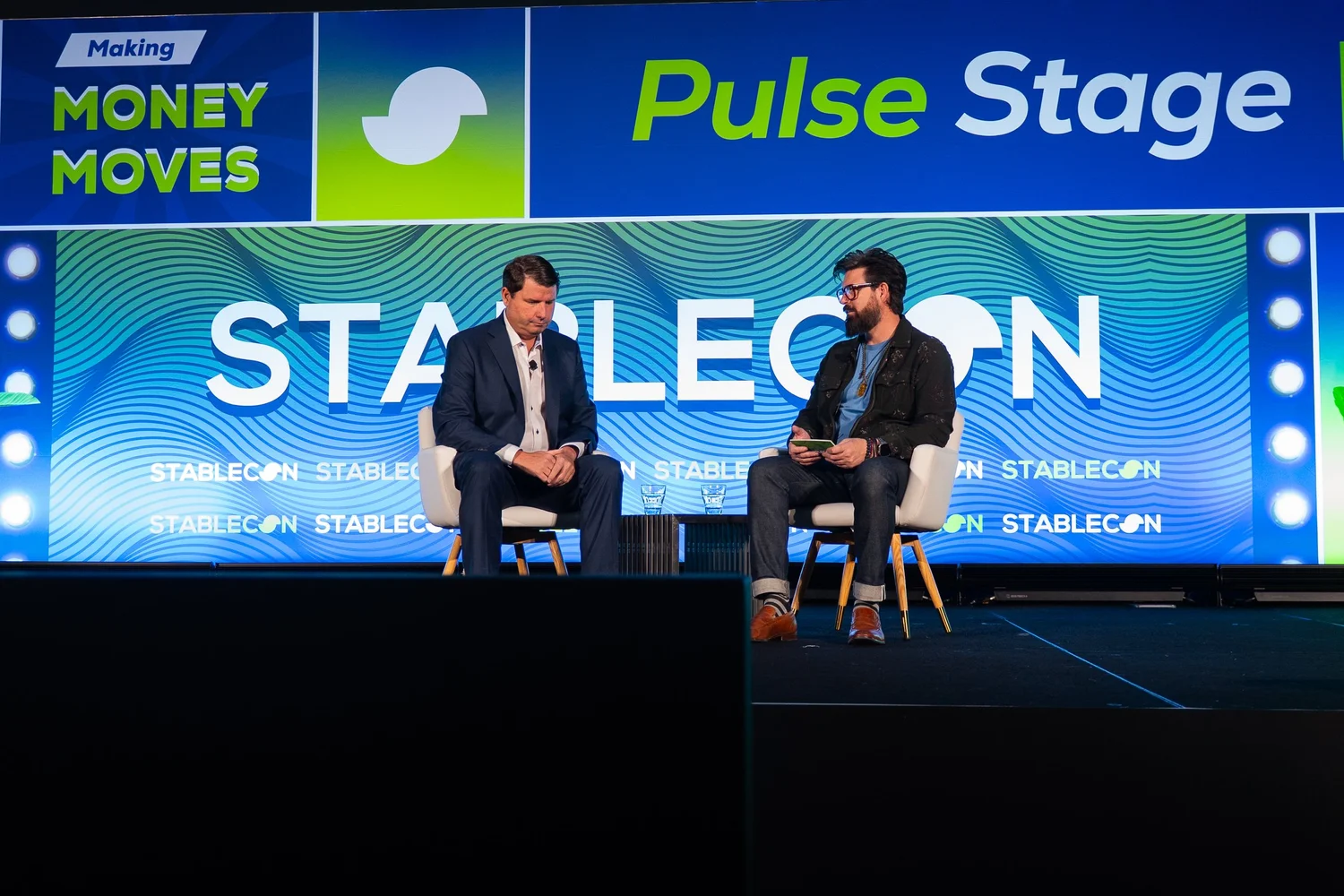
At the Gaylord National Resort & Convention Center, Tedd Huff, founder and CEO of Fintech Confidential and Voalyre, sat down with Jamie Walker, Executive Vice President and Head of Digital Assets and Money Movement at U.S. Bank, and skipped the victory lap. He opened with the question the market asks every time a bank makes a stablecoin announcement.
"Is this a hammer looking for a nail, or is it a nail looking for a hammer?"
Walker laughed and suggested Huff had borrowed the line from him. Then he answered it.
From curious to demanding
In about nine months, Walker said, the conversations U.S. Bank has with its customers have changed completely. Clients who once wanted to understand what the technology meant are now asking for it, drawn by the chance to improve how they manage liquidity.
"So demand is there, there's no doubt."
He was specific about where it comes from. The strongest pull, in his view, is from larger customers on the institutional side. And that is where the bank is starting. Rather than ship a product and look for buyers, U.S. Bank is following what customers ask for.
"We're gonna build around what that demand is."
That is the reasoning behind USBDC. Walker said the bank is leaning in hard on the stablecoin because it has live opportunities with customers today, ones that bring value to those customers and to the bank itself.
What advocates underestimate
Huff then asked the question that gave the session its edge: what are the hardest problems stablecoin and tokenization advocates tend to underestimate when they talk about these products in banking? Walker named two.
The first is a side effect of the thing advocates like most about blockchains: transparency. When every transaction is visible on-chain, a bank issuing or using a stablecoin has to decide where its responsibility begins and where it ends, including how far back through the chain it is expected to look. Walker said that question still has to play out.
Regulation is helping. He pointed to the passage of the GENIUS Act as the framework that is giving banks room to move, and to the momentum behind the CLARITY Act, which he said the industry will be watching closely over the next few months.
"We won't play in a space that's the Wild West."
The second problem is ownership. Public blockchains don't have a single owner, and banks are built around knowing exactly who is accountable. Walker put it in the plainest terms of the day.
"Whose throat do you choke when something goes wrong?"
That is why the choice of network matters so much to a bank, he said, and why Stellar, the network U.S. Bank chose for USBDC, has been important. Who runs a network, and who participates in it, decides who carries the liability.
"Picking what network you decide to go on, and who's part of those networks, is gonna be really critical."
On the day his bank put a stablecoin on a public blockchain, Walker did not claim the hard parts were solved. He named them: how far a bank's responsibility runs on a transparent ledger, and who carries the liability on a network no one owns. The technology question is settled. USBDC is U.S. Bank's bet that the accountability question can be answered too.