PropTechAIBlueprint 2026September 2026
Three Out of Ten: David Blumenfeld’s Blueprint Panel on Running Tech Pilots That Actually Scale
Real estate is an industry where you are not allowed to fail. At Blueprint, NexServit founding partner David Blumenfeld asked an operator, an investor and an MIT researcher how to test new technology anyway, and when to kill a pilot that isn’t working.
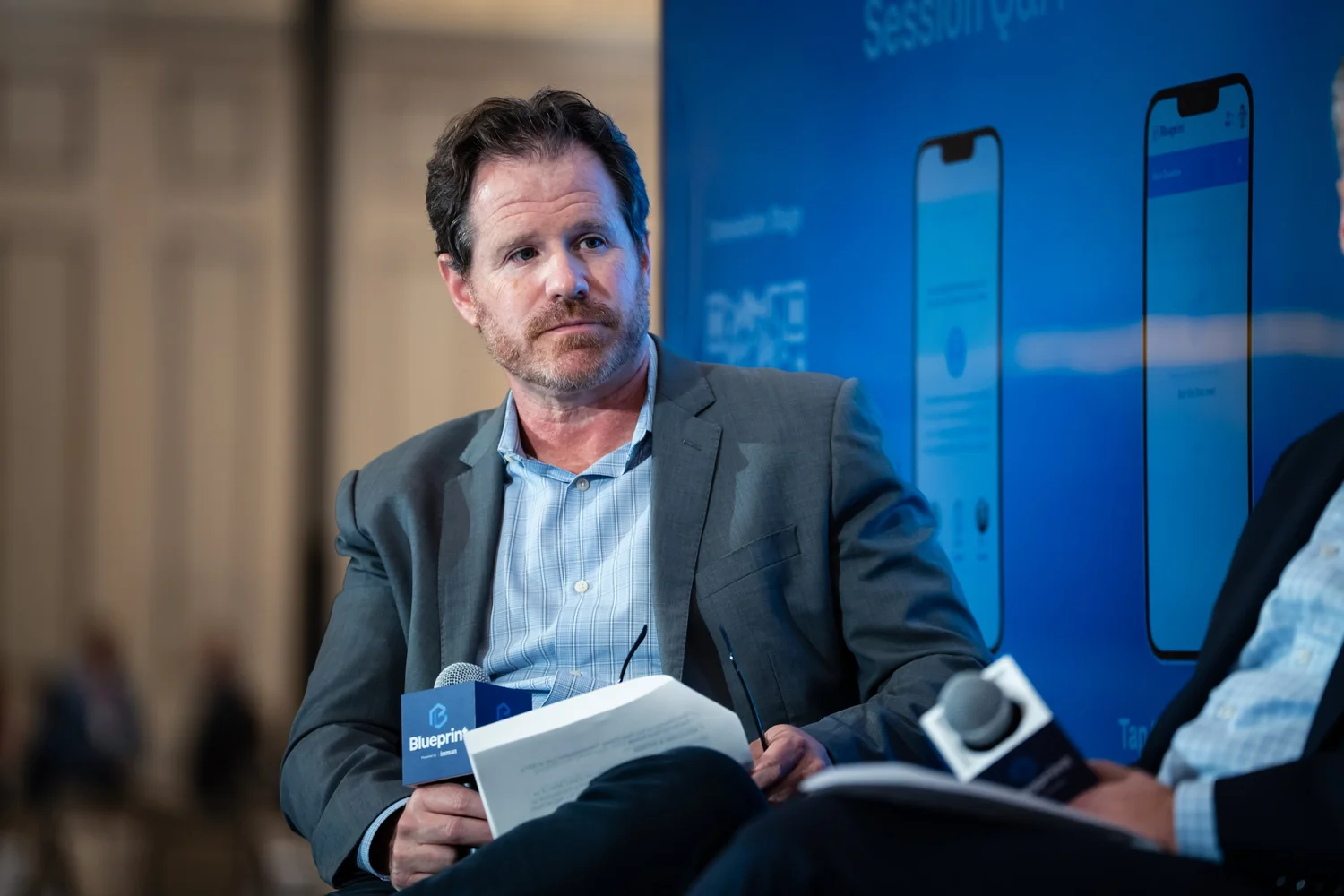
LAS VEGAS A pilot is supposed to be the safe way to try something new. David Blumenfeld opened his panel on the Blueprint Innovation Stage by pointing out how often it isn’t.
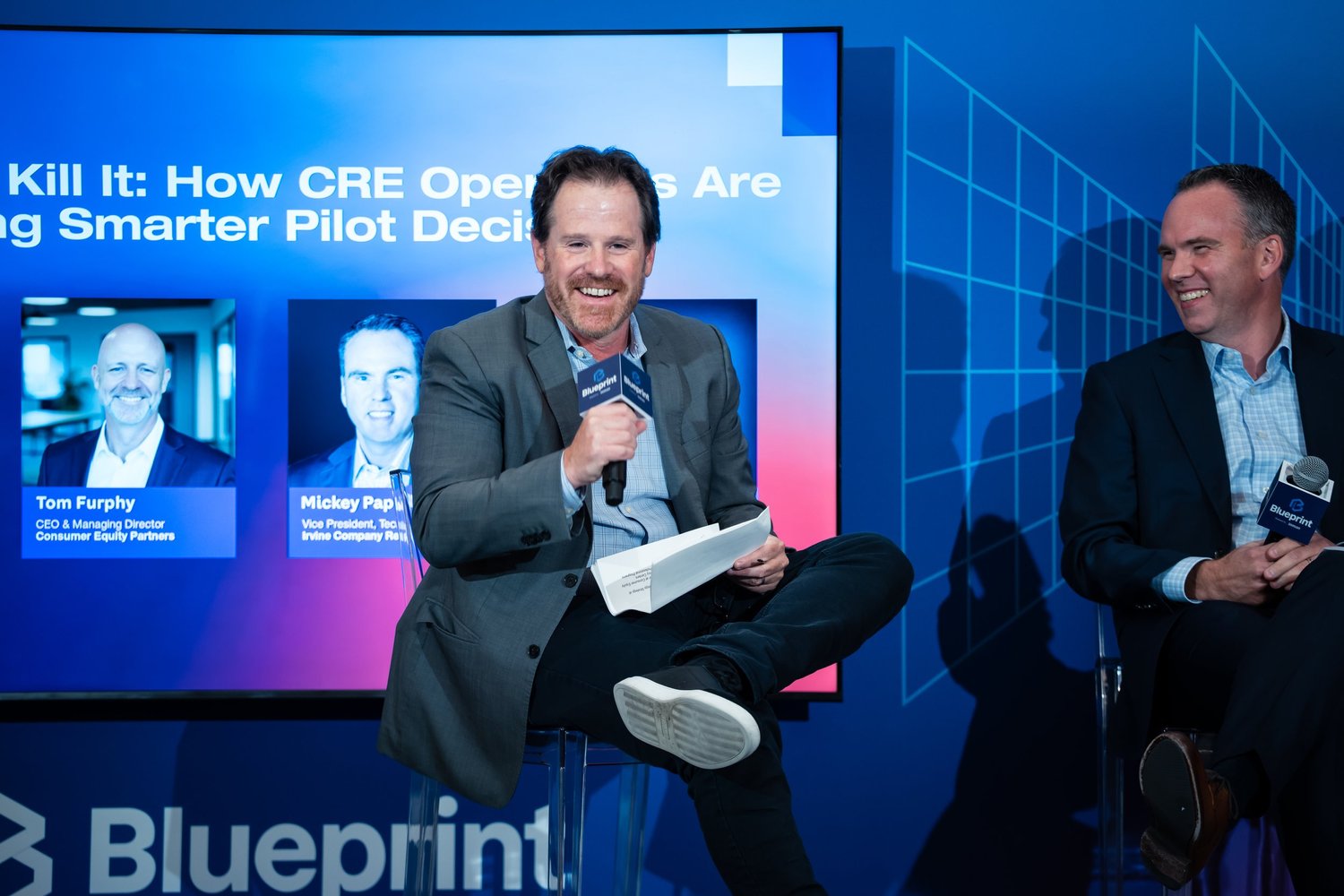
Pilots let a company kick the tires on new technology without a large investment, said Blumenfeld, a founding partner at NexServit, a PropTech consulting and execution firm. But many are set up so that even a successful one has no way to scale, and failing ones linger and drain resources. He framed his three panelists by role: Mickey Papillon of Irvine Company runs pilots, Tom Furphy of Consumer Equity Partners funds them, and James Scott of MIT tells you whether they actually worked.
Not allowed to fail
Scott, who directs the MIT Center for Real Estate and teaches courses on PropTech ventures and AI, started with why this is so hard in real estate. In tech, finance or biotech, you can get it wrong again and again until you get it right, and then you’re on a magazine cover.
“In real estate, it’s the exact opposite. It’s not just risk-averse, it’s you’re not allowed to fail.”
Get it wrong once, he said, and your lenders and investors disappear. The industry doesn’t reward being first. Blumenfeld put it more bluntly: everybody wants to be the first to be second. In real estate, it’s first to be tenth.
Furphy, who built Amazon’s consumables business, including Amazon Fresh, before founding his investment firm, argued that caution is now the bigger risk. Companies that don’t experiment are going to be left behind by the ones that do, he said, because those competitors are compounding what they learn.
A .300 batting average
Blumenfeld asked for numbers. Papillon said Irvine Company runs three or four pilots at a time across its office, apartment and retail divisions. Physical pilots, which cost more to install, succeed about four times out of ten. Pure software pilots succeed about three out of ten.
Furphy said that is about right, and that much higher would be a warning sign. If eight or nine out of ten pilots succeed, you aren’t taking enough risks. What matters is what the other seven teach you.
“If you’re not learning from the ones that didn’t succeed, that’s really a pilot that fails.”
Write it down, and give it six months
Every panelist wanted a pilot to start with a written plan. Furphy credited Amazon’s six-page memo: what are we trying to accomplish, how is it better than today, what metrics will prove it, and how will the pilot be designed to show results in time to decide. His firm’s rule of thumb is that a pilot must be designed, run and evaluated within six months. Take a year, he warned, and a dozen better solutions may have reached the market while you were measuring.
Scott pushed back on one point. If a pilot feels like a purchase that has to be justified, people will fight to make it look successful. A pilot, he argued, is buying information: is the juice worth the squeeze? Furphy agreed that the whole point is learning, and that no one should buy the software first and pilot it after.

Rolling out Claude to everyone
Blumenfeld raised a client that had just decided to give Claude to its entire organization, hackathon-style, to see what people built. Scott said that isn’t necessarily a mistake. A general-purpose model, he argued, is like Excel: the front desk and the C-suite both use it, each in their own way, and no one gets a single training course on how. But it needs structure, or “your tokenization bill at the end of the month is gonna be very fun.”
The bigger point, Scott said, is that AI can’t be the reason. Companies first have to understand their own processes and where the real problems are, which in real estate can be uncomfortable. How do you write down that a weekly coffee with four relationships built over 20 years is where the value is?
Are people asking for it?
On measuring success, Papillon’s first test is whether the pilot made anything worse somewhere else in the business. The second is simpler: are people who aren’t in the pilot asking for it? If a colleague hears about it and wants in, something is working.
Scott, despite being based at MIT, said that unsolicited demand matters more to him than the numbers. People behave differently when they know they’re being watched, an effect researchers call the Hawthorne effect, and vendors give pilot teams extra attention and training. The real question is whether results hold up when the spotlight moves on.
Furphy sorted the value of any pilot into four buckets: revenue, cost, friction and capital efficiency, each tied back to the lever that actually drives the outcome.

Knowing when to kill it
Furphy shared what an innovation executive at a major grocery retailer had told him that week: we let pilots linger way too long. A passionate owner keeps reconfiguring a pilot that isn’t working, and it helps no one. Pivot if the prize is still there, he said, but time-box it.
Scott’s favorite warning sign is the calendar. When the meetings slide from weekly to every two weeks to monthly, and the executives stop showing up, the pilot has petered out.
“There might be more enjoyment that comes out of killing a pilot than actually starting a pilot.”
That was Papillon, and the room laughed. To close, Blumenfeld asked what each of them was most excited to see piloted in the next year. Scott pointed to his AI and real estate students, whose final project is building an agent that handles at least three real estate tasks. Furphy named spatial AI: using existing cameras, without facial recognition, to understand how shoppers move through a property, from the parking lot to the store. Papillon wanted anything that improves the customer’s experience, from the curb through the whole shopping trip.
The takeaway
Blumenfeld’s panel landed on a simple standard for an industry that hates to fail: write the plan down, give it six months, and expect most pilots not to work. A pilot that dies on schedule, and teaches you something on the way out, is doing its job.
 More from Las VegasSkip the Paper Era: Braven’s Carlos Chávez on Whether AI Is Latin America’s Insurance Leapfrog
 More from Las VegasOne Risk at a Time: Embea’s Johannes Becher on Healthcare Data, Underwriting and the Future of Life Insurance
← All coverage