Fintech & Web3AIRipple SwellOctober 2026
The Web Was Always Supposed to Get Paid: Stefan Thomas on AI Agents, HTTP 402, and Taking Another Shot at Dassie
AI agents now outnumber people on many websites, and none of them look at an ad. At Ripple Swell, Coil CEO and former Ripple CTO Stefan Thomas explained why the web's missing payment layer suddenly matters, and why he is rebuilding the network he once shut down.
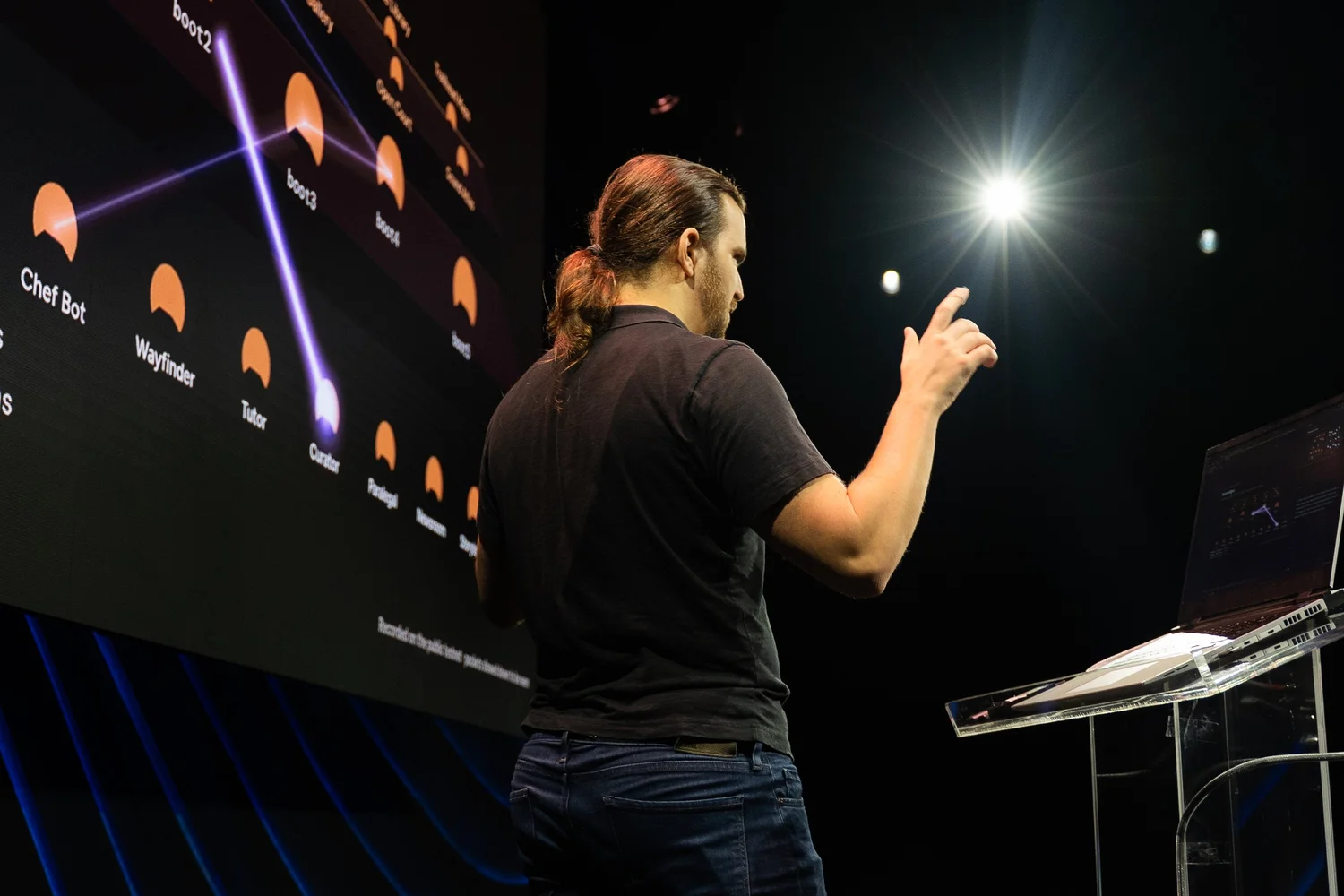
NEW YORK Every website that runs on ads has a new problem. Most of its visitors are no longer people.
Stefan Thomas opened his Ripple Swell session at The Shed in Hudson Yards with traffic, not tokens. The CEO of Coil and former CTO of Ripple runs a few websites himself, and he described what every site owner in the room has started to notice in their analytics.
"If you run any kind of website, you now see 10, 100, a thousand times more traffic from agents than you see from humans."
For a business model built on attention, that is a structural break. An AI agent reading a page on someone's behalf does not see the banner, the pre-roll, or the sponsored slot. As Thomas put it, agents don't care about your ads.
The industry's response so far has been a standoff. Site owners sign up for bot-blocking services to keep agents out. Agent builders work to make their software look more human. Thomas called it an awkward arms race that really doesn't help anyone.
A status code that waited 30 years
None of this surprised him. Fixing it was the reason Coil existed. Thomas showed a photo of himself on stage in 2019 at View Source, Mozilla's developer conference, talking about HTTP 402, "Payment Required." The code was set aside in the web's early specifications for a future in which pages could charge for themselves, and it was never put to work.
Coil's answer was Web Monetization, an open web standard that is still active today. A site adds a small tag. Any visitor that wants to pay, human or agent, reads the tag and starts sending money.
"Instead of ads, you just make money directly from your users."
The standard stalled for one reason. It depends on Interledger, the protocol for moving value between different payment networks, and there is no live Interledger network for developers to plug into. People who want to use Web Monetization can't.
Yes, but also no
Thomas was direct about the competition. A large industry consortium is now pursuing the same idea under the name x402, with major companies attached. Is the problem solved?
"It's like, yes, but also no."
The strength of that coalition is also its weakness. x402 supports many payment methods, so developers start by choosing one. Thomas walked through the result: an agent set up to pay on the XRP Ledger arrives at a site that accepts EVM chains and Solana, finds no match, and cannot pay. A shared standard for negotiating payment is progress, he said, but the point is for the payment to actually go through.
The network he shut down
The most candid moment came when Thomas looked back. Years ago, Thomas and his team ran moneyd, a grassroots Interledger network that anyone could join. It had problems: participants had to find their own peers, wait for approval, carry credit risk with one another, and settle balances by hand. Thomas decided to shut it down and return to persuading companies to build the infrastructure instead.
"I now think that was a mistake."
Had the network kept growing, he noted, it would be close to eight years old. His conclusion after a decade on the problem has not changed: a grassroots network is the way to go, and he is ready to take another shot at it.
That shot is Dassie, which Thomas described as the old network reborn. He went back through the original list of failures and answered each one.
- Finding peersAutomatic. A Dassie node finds its own peers, the way nodes on the XRP Ledger do.
- Getting approvedNot required. Nodes join a hub instead of waiting on a gatekeeper.
- Credit riskGone. Funds sit in the hubs, so nodes no longer need to trust each other.
- SettlementAutomatic, with the XRP Ledger as the settlement layer.
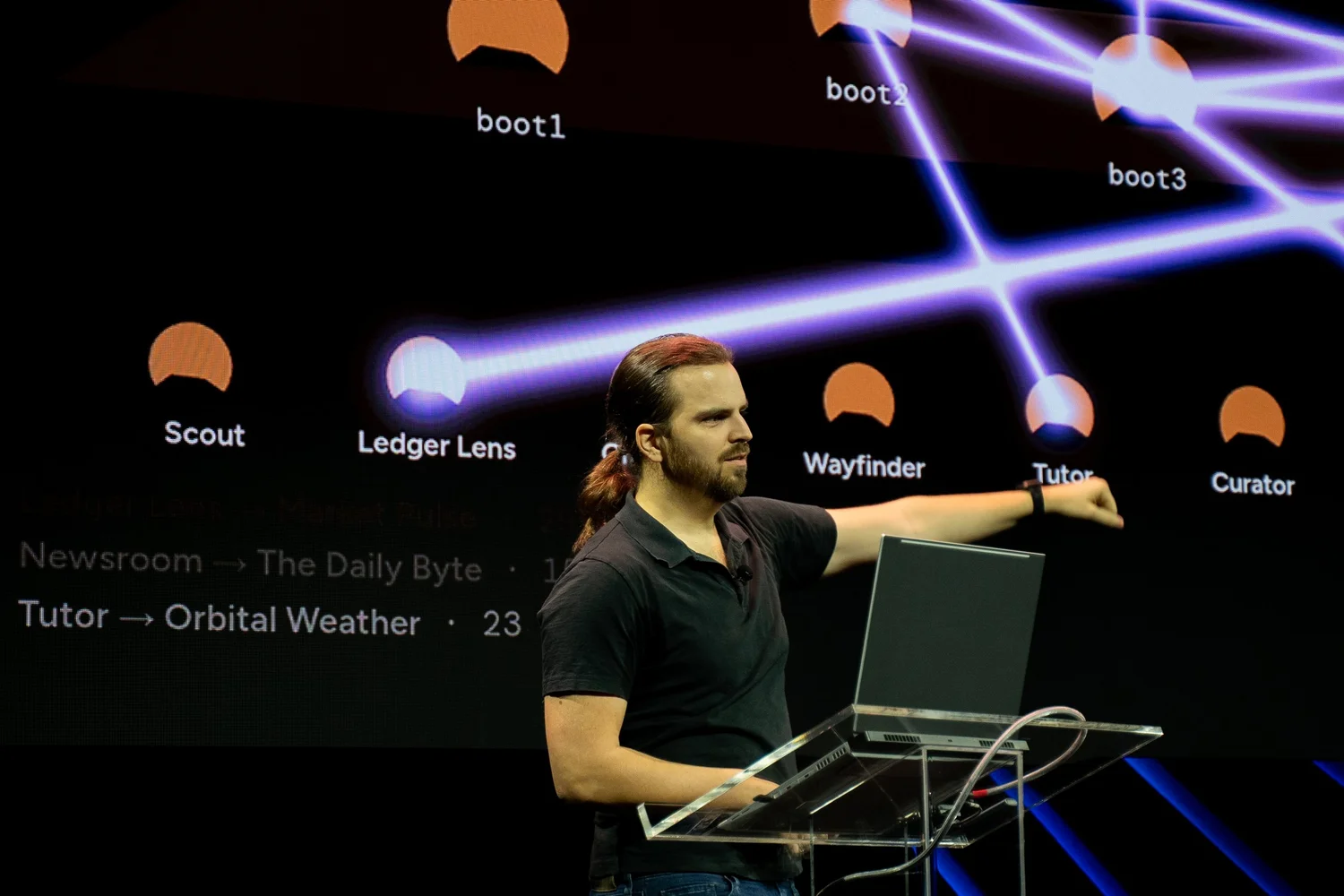
Don't trust the code. Verify it.
This version is being built differently. Thomas has used AI tools to build Dassie as a peer-to-peer application, and much of the recent progress happened in roughly two weeks. He named the obvious objection before anyone in the audience could: unreviewed AI code is likely full of bugs, and bugs in payment software mean lost money.
"We're just not gonna trust the code, and we're gonna verify the code."
The method comes from TigerBeetle, a Y Combinator company that itself borrows from NASA and others: distributed simulation testing. The network is run again and again under different scenarios and conditions to see whether anything breaks. Thomas said that as a lone developer on the first version of Dassie, building that kind of testing would have taken him a very long time. With AI, he simply built it.
"This is how I think you can get comfortable and confident about code that AI has written."
The two halves of the talk meet in the same place. The agents breaking the web's ad model are also its most obvious new paying customers, if they have a way to pay. HTTP 402 has been waiting for that network since the early days of the web. Thomas is betting his second attempt arrives just as the web needs it most.