AILeadership & WorkMoment 2026October 2026
“The Cost of Getting It Wrong”: Amir Ghowsi Asks HeyGen and Flock Safety How AI Is Really Changing Customer Success
Everyone has been told to be more agentic. At Moment 2026, Cora.ai co-founder and CEO Amir Ghowsi skipped the hand-waving and asked two customer success leaders, one at an AI-native rocket ship and one where seconds matter, what actually works.
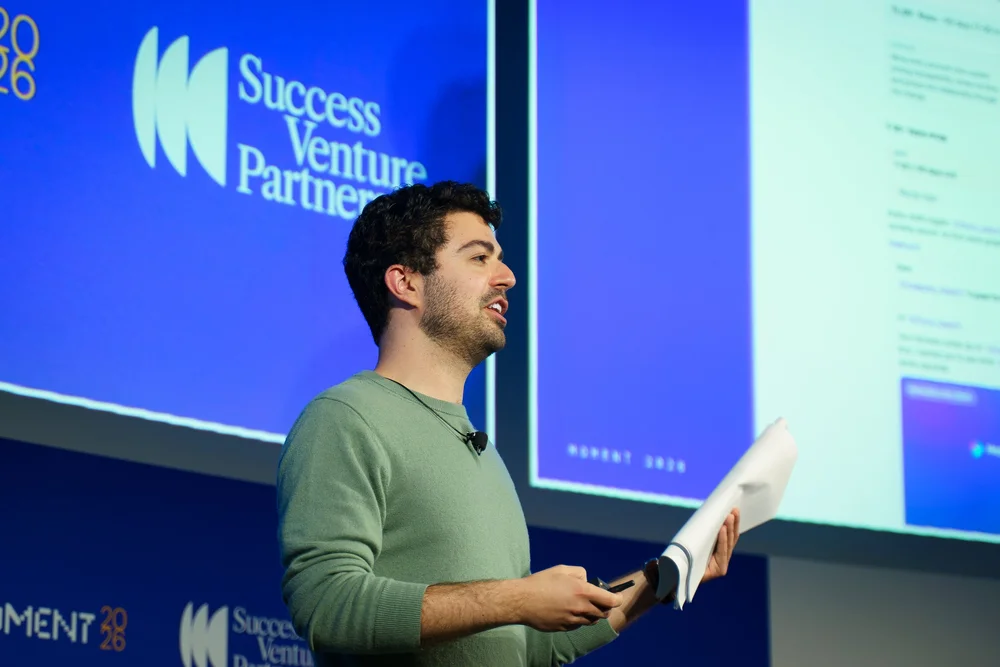
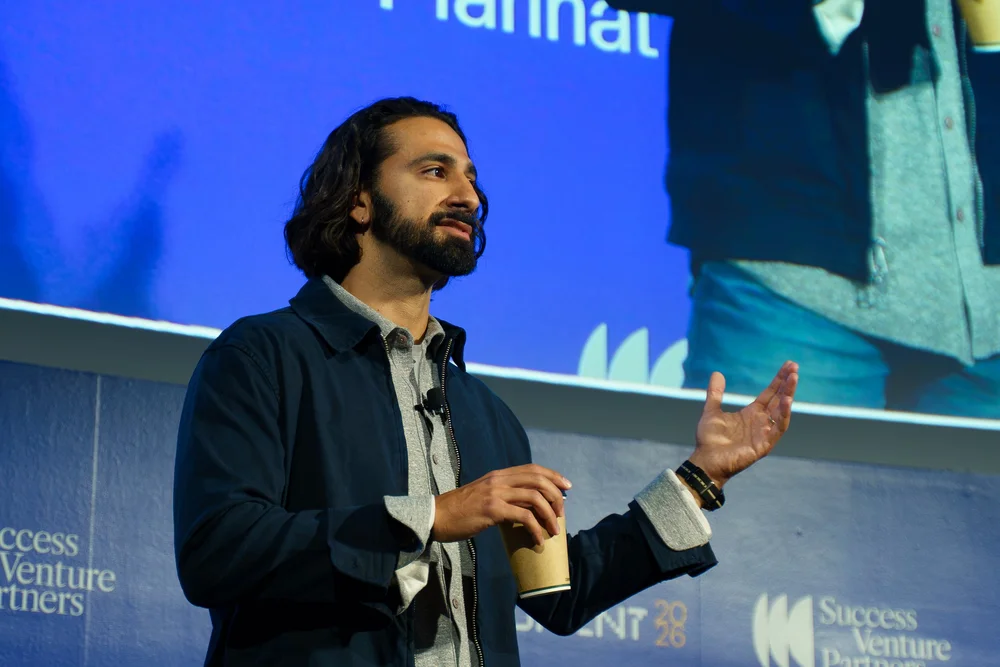
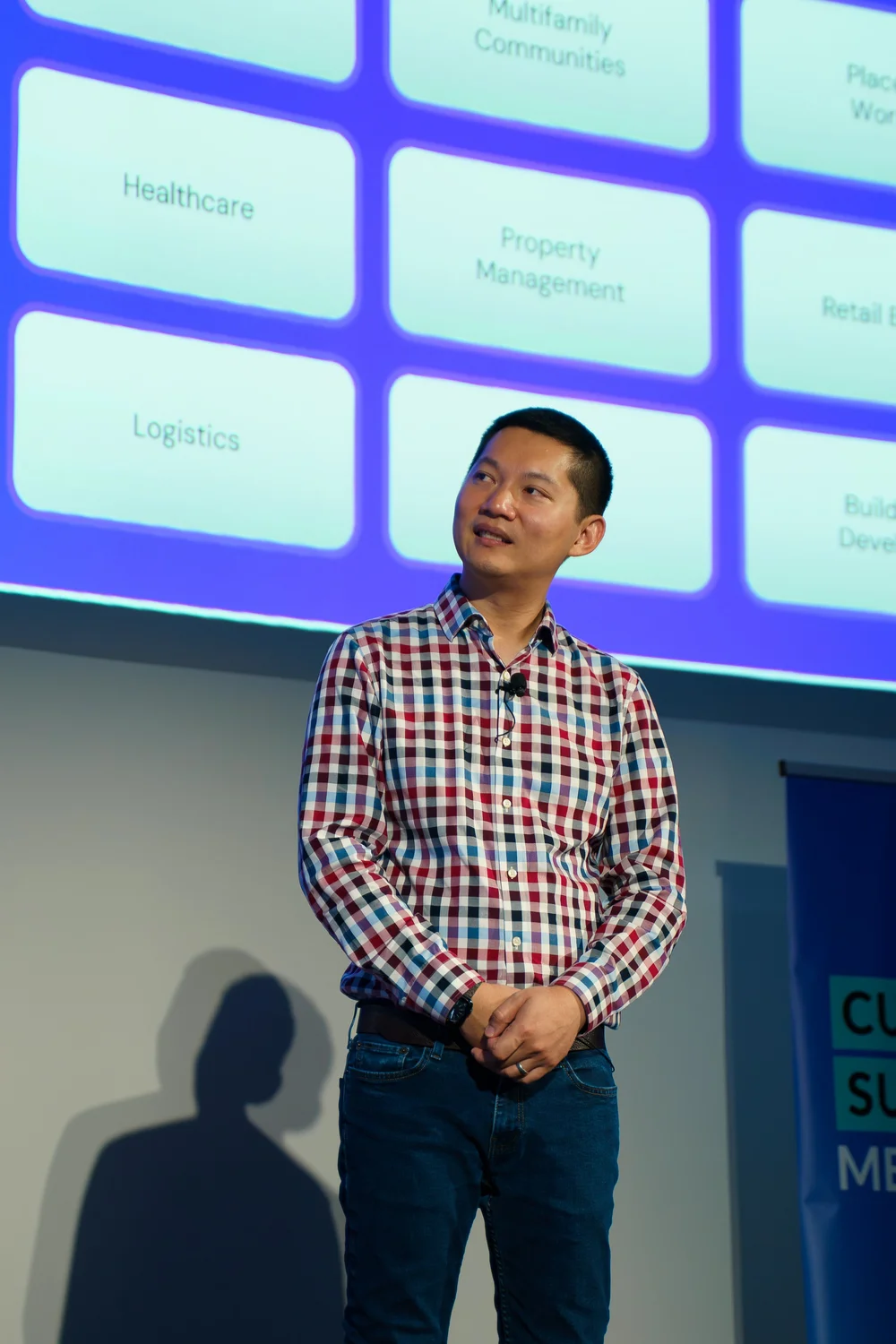
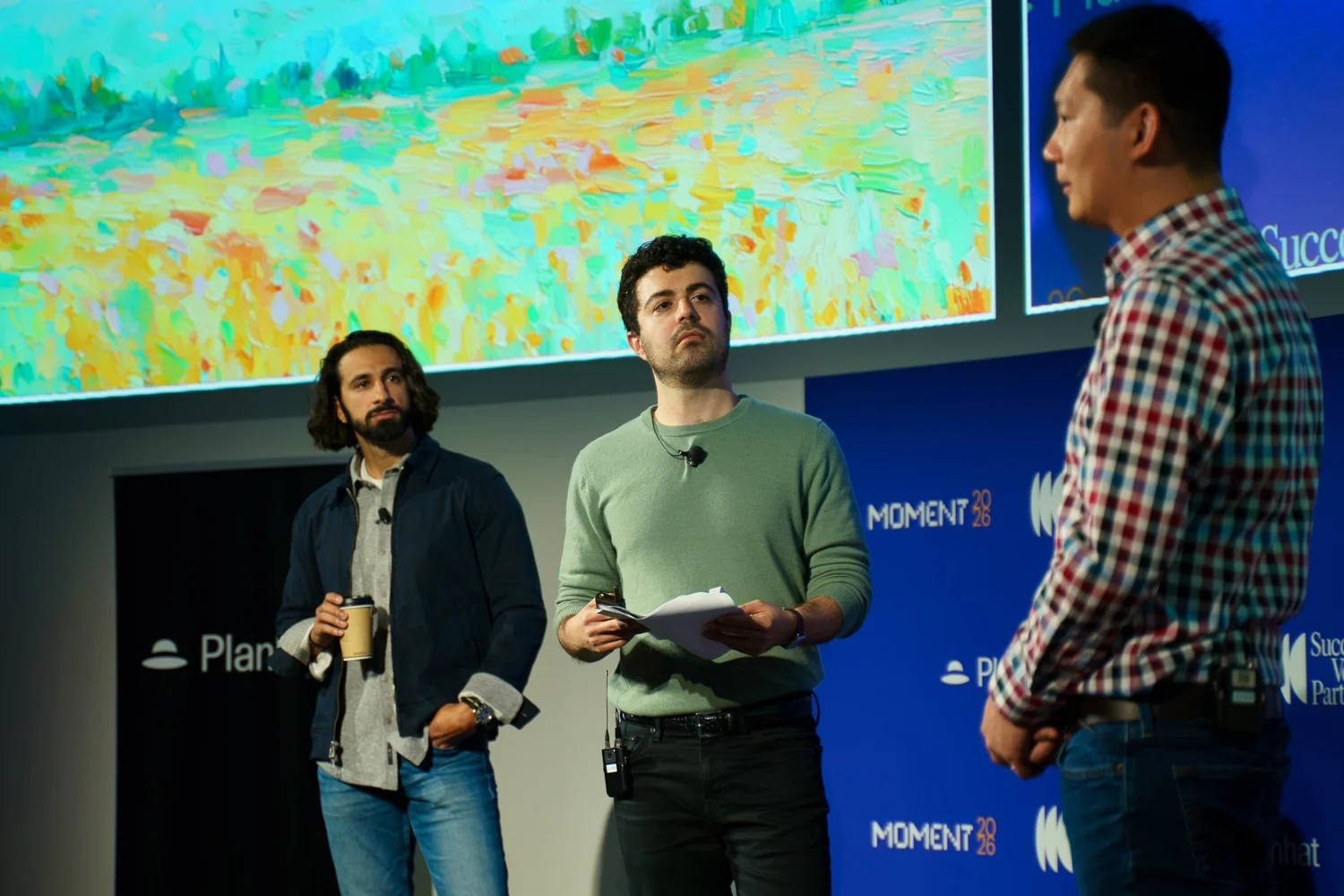
Left to right: Amir Ghowsi, Shy Goodarzi, Will Ji · Planhat Main Stage · Photo: A Founders Corner
- ModeratorAmir GhowsiCo-Founder & CEO, Cora.ai
- PanelistShy GoodarziHead of Customer Success, Flock Safety
- PanelistWill JiHead of Customer Success, HeyGen
NEW YORK Amir Ghowsi opened with a show of hands: how many people in the room had been told this year to be more agentic, or to push AI into their teams?
Most hands went up. That, said the co-founder and CEO of Cora.ai, was the point. Everyone is being told to adopt AI, and most of what they hear is hand-waving.
"There's a lot of hand-waving."
His panel on the Planhat Main Stage at Moment 2026, during NYC Customer Success Week, was built to be the opposite. Ghowsi set three ground rules: show how real leaders are deploying agents in the wild, keep it practical with frameworks people could use the next day, and speak to two kinds of leader in the room, those building AI-native teams from scratch and those changing an entire enterprise.
His two panelists covered both ends. Will Ji runs customer success at HeyGen, an AI-native company growing at a pace few can match. Shy Goodarzi runs customer success at Flock Safety, where a mistake is not measured in churn.
When seconds matter
Goodarzi described a customer base most software companies never face. Flock serves law enforcement, along with corrections, federal agencies, businesses, places of worship, retail and banking. Inside a single police department there are six or seven distinct roles, from chiefs and sheriffs to officers and administrators. Behind them sit taxpayers, community advocacy groups, city councils, mayors' offices and city managers.
When a chief calls because they are trying to solve a crime in seconds, he said, there is no room to slow down and follow process. The leadership challenge is keeping that expertise and care at the center while still growing sustainably, because without sustainable growth, Flock does not reach its mission.
He gave the approach a name, half joking: multi-thread maxing, constantly thinking about every audience a decision touches. And he reframed what automation means when the stakes are this high.
"Automating a simple workflow is not necessarily about how do we get it right. It's thinking about the cost of getting it wrong."
For Flock, he said, the cost of getting it wrong is an Amber Alert that goes unsolved, a kidnapping victim not found, a predator near a playground not caught. He acknowledged it was heavy for a customer success conference. It is also, he said, the reality his team lives in with every decision.
Engineers inside the customer
Ghowsi turned to Ji with the question the room wanted answered: how do you structure a team at a company growing at HeyGen's speed?
Ji described a focused enterprise motion built around forward-deployed engineers. They are assigned to strategic accounts, which HeyGen defines as customers that share its vision for the product and the industry. Each engineer covers about five accounts and works directly with the customer's developers, product teams and end users to build workflows and solutions.
That model has two jobs. The first is keeping those accounts. The second is bringing what the engineers learn back into HeyGen's product, so it becomes something the company can sell to its next best customers.
The metrics that predict growth
On measurement, Ji said that in hypergrowth, net dollar retention looks healthy almost by default. The number that gets more attention now is gross revenue retention: whether existing customers renew at the same contract value year after year. Every member of his team is held accountable to both.
The next metric is outcomes, which the panel called solve stories.
"If a customer within the first year has anywhere from three to five solve stories or more, there's a tendency to expand even within that year."
That makes outcomes a leading indicator of expansion. Customer success managers are pointed at the white space, because solving more problems leads to more expansion, which leads to solving more problems.
Ghowsi promised less hand-waving, and his panelists delivered two concrete models. One company embeds engineers inside its best customers. The other designs every workflow around what happens if it fails. Different paths to the same discipline: knowing the customer well enough to build AI that actually works for them.