AI & WorkAI LiteracyTransform 2026March 2026
Ten Minutes a Day, by Text: Michael Ioffe and the Department of Labor Launch Make America AI-Ready
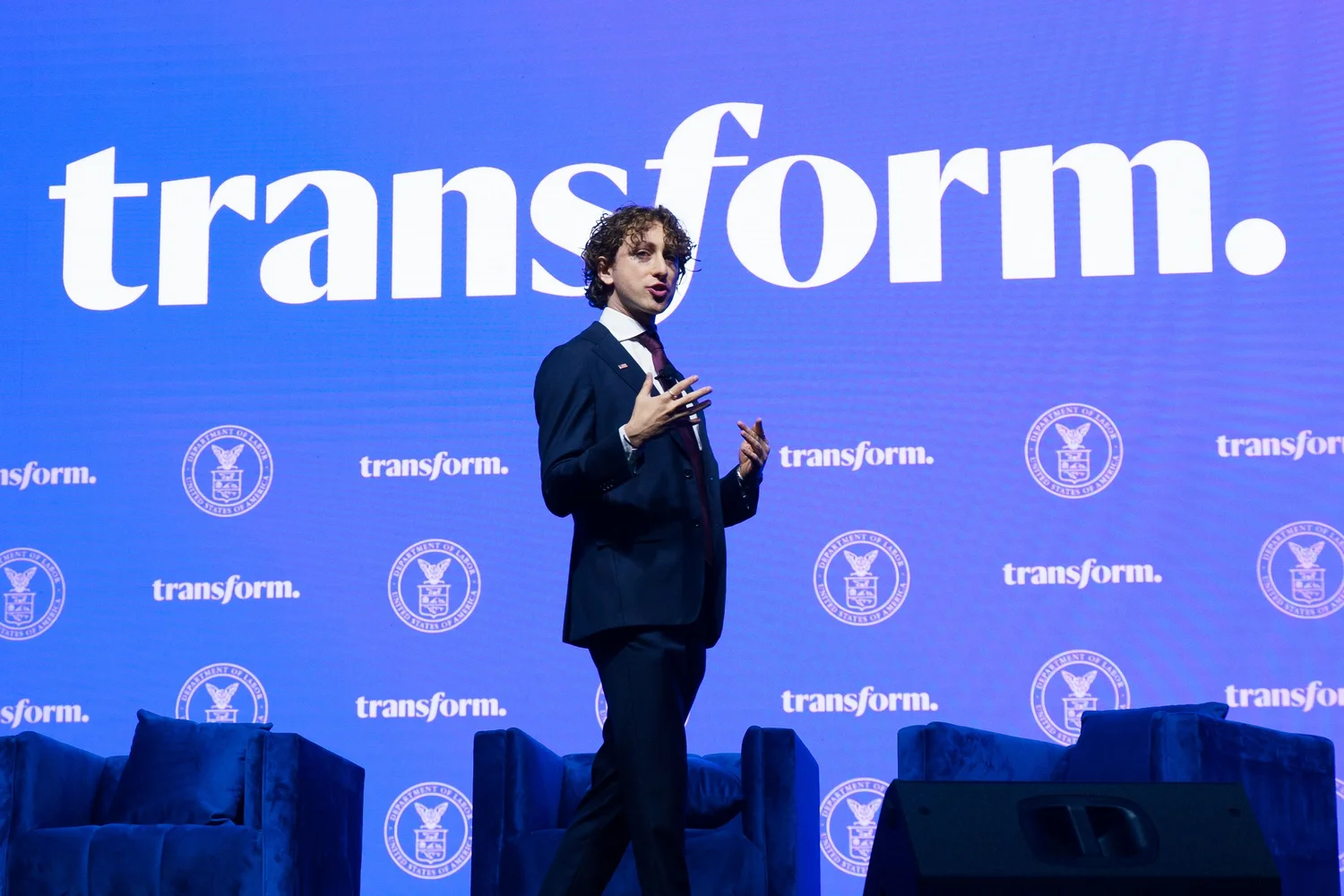
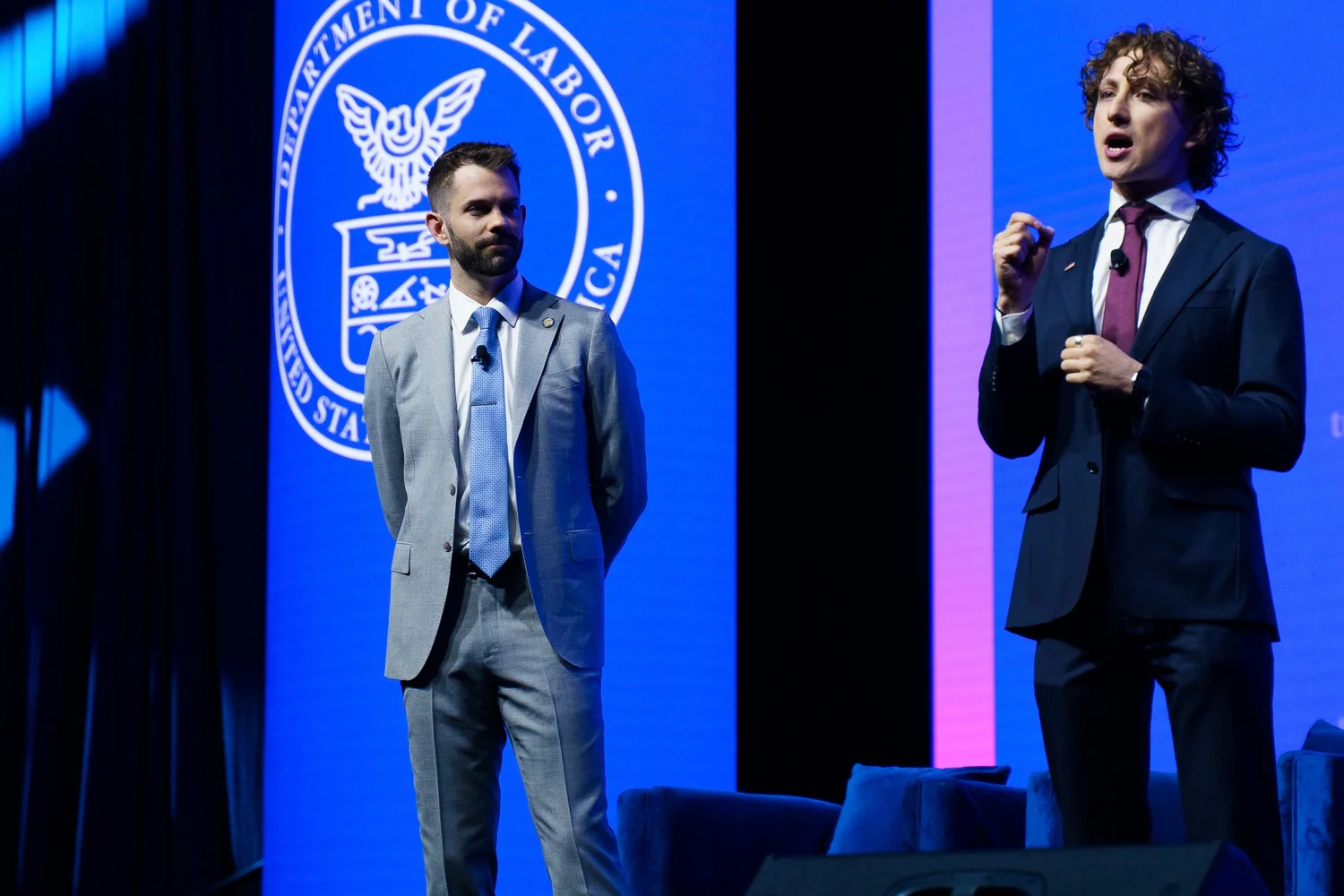
On the Transform 2026 stage, Arist CEO Michael Ioffe and Labor Department Chief Innovation Officer Taylor Stockton unveiled a free AI course built for every American worker, delivered entirely over text message.
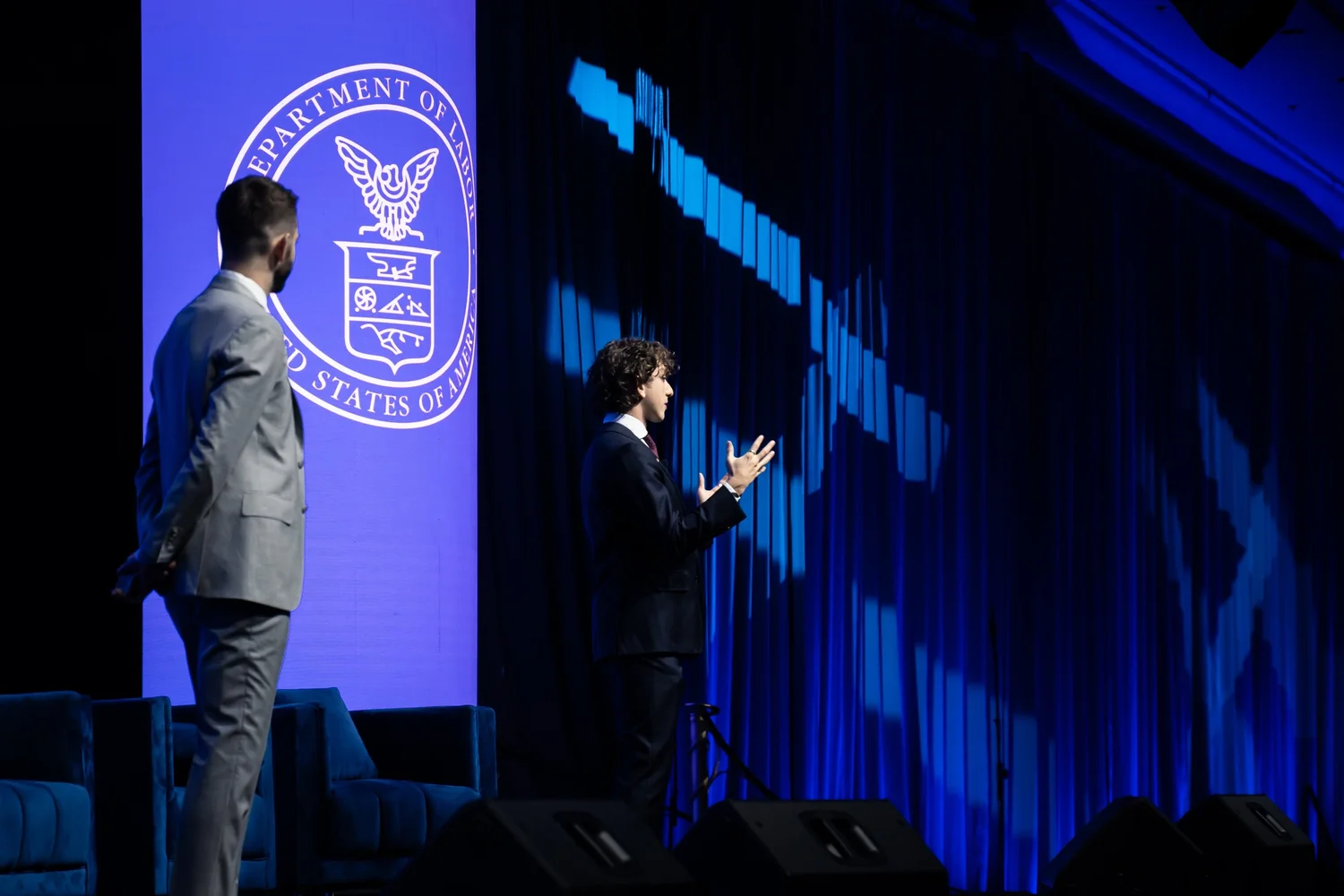
LAS VEGAS No app. No laptop. No login. Just a phone, ten minutes a day, and seven days. That was the pitch when the U.S. Department of Labor and Arist took the stage at Transform 2026 to launch Make America AI-Ready, the department's flagship AI literacy initiative.
Taylor Stockton, the department's Chief Innovation Officer, framed the moment in sweeping terms. The concept of labor itself, he said, is "transforming perhaps more radically than any time in American history." The data shows real upside for workers, from new high-paying jobs to productivity gains that can lift wages. But he was just as direct about the other side of it: a meaningful amount of fear and uncertainty, among blue-collar and white-collar workers alike.
"How is AI gonna change my job? How do we know we can trust AI? What is AI's benefit for me?"
Those are the questions the department hears, Stockton said, and the benefits only reach workers who have the skills to engage with the technology. Workers "can only access those benefits if they have the foundational skills and understanding of how to engage with this technology."
Reach, impact, emotion
Ioffe, the Co-Founder and CEO of Arist, called the partnership "the privilege of a lifetime" and walked the room through the three considerations behind the course's design.
Reach. The course runs entirely over text message and is toll-free, so it doesn't depend on internet access, a laptop, or free time. It was built around the lives of busy workers, including people working multiple shifts.
"This course is designed to be taken on the bus ride home or in between a shift. It really is designed to meet you exactly where you are."
Impact. Too many learning programs, Ioffe argued, don't deliver because they ignore modern behavioral science. This one draws on learning science research from Stanford, MIT and UPenn, spaced out over time and broken into bite-sized, conversational lessons, with nudges designed to get people using AI in their day-to-day lives, not just reading about it.
Emotion. The last consideration was the one most programs skip. Ioffe acknowledged that "a large portion of the American workforce are rightfully scared about AI," and said the course was written to be friendly and conversational, explaining complex ideas with the worker at the center.
What the course teaches
Stockton said the content is built on the Labor Department's AI Literacy Framework, released earlier in the year, and covers its five foundational areas over the seven days:
- PrinciplesHow AI works: pattern matching, and why it's probabilistic rather than deterministic
- Use casesGoing beyond using AI as "a glorified Google search" to the tools that unlock deeper value
- DirectionGiving AI the right context, data and objectives to perform well
- EvaluationChecking AI-generated content for completeness, accuracy and relevance
- ResponsibilityNavigating the ethical questions that come with using AI
A hundred million workers in one room
Ioffe closed with three asks of the audience: enroll, share it with three people, and bring it to their organizations. Transform draws the leaders who run hiring, training and workforce strategy, and he made the math plain.
"The people sitting in this room combined are responsible for training and enabling over a hundred million American workers."
The goal, he said, is to "make sure that no American is left behind." Stockton put the scale at the full American workforce, roughly 160 million people, and described the course as the first piece of a broader initiative to come under the same brand.
Not a symbolic gesture
Stockton ended on purpose. Success, he said, won't be measured by launching a course, but by whether it actually equips Americans to thrive in an AI-powered economy.
"It's not just about a check-the-box exercise. It's not just a symbolic gesture."
Writing on LinkedIn after the launch, Ioffe credited Stockton and Deputy Secretary of Labor Keith Sonderling with the vision for the initiative, and thanked Amazon and Meta for providing compute infrastructure and media support to help Arist scale it nationwide. At launch, enrolling took one text: READY to 20202.